





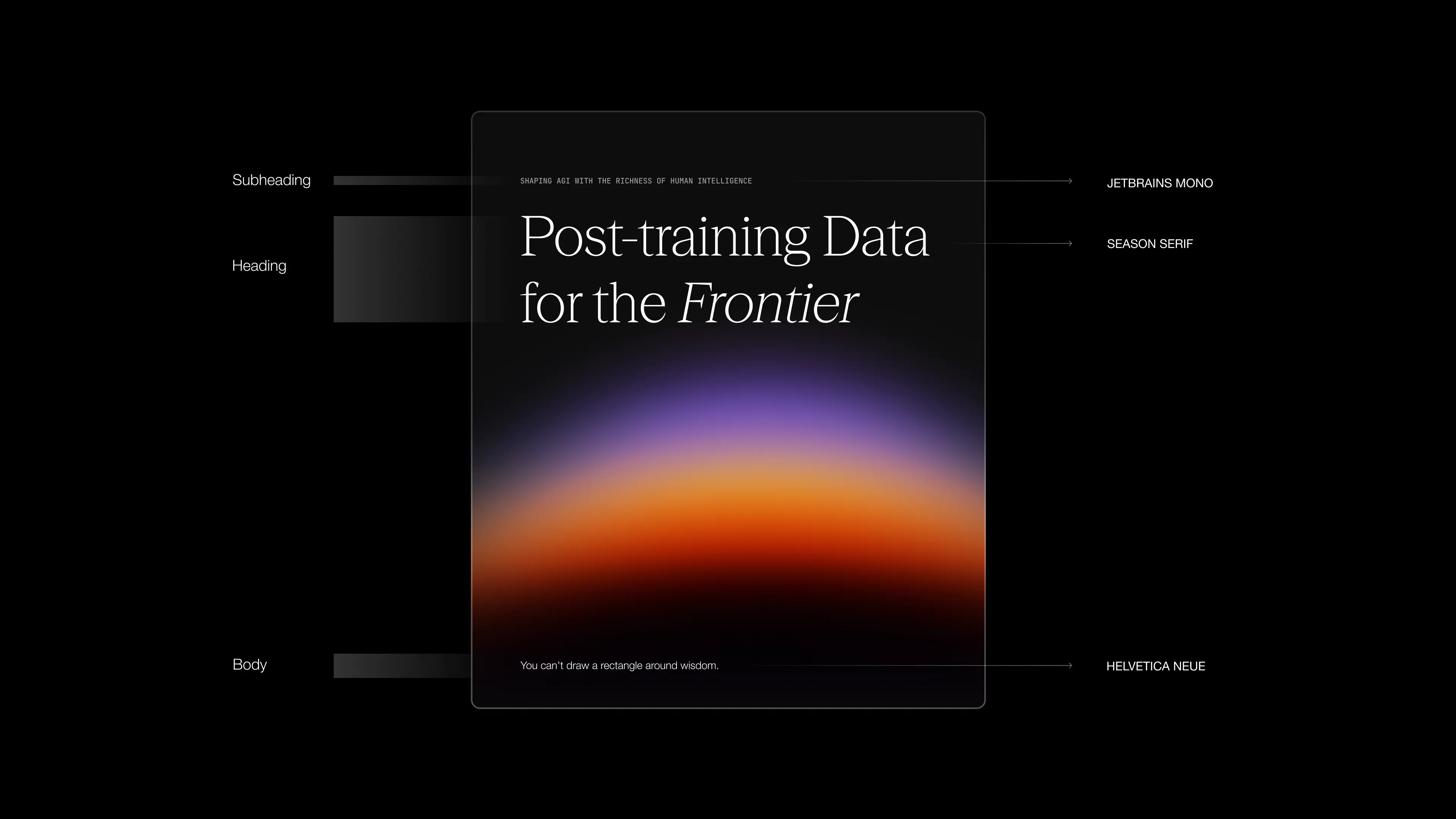
From day one, Surge needed more than a brand that looked good. They needed design that built credibility, earned trust, and scaled with them as they grew. They needed a design partner that ensures they stand out in the crowded world of AI infrastructure.
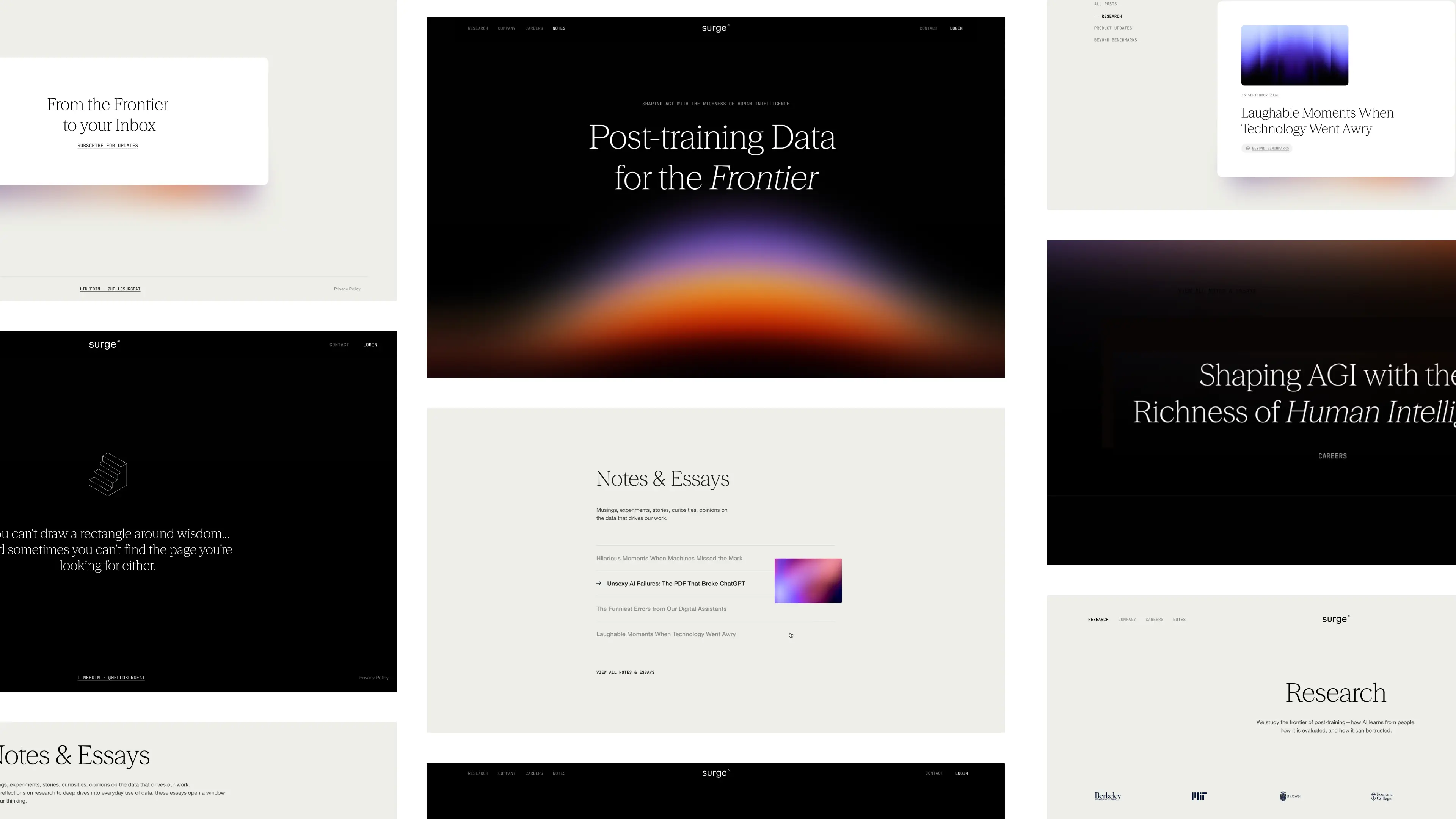
They chose Konpo. More than a vendor, we became their plug-and-play design team: senior talent embedded alongside leadership, shaping everything from their first identity to their website, product, and systems. At every stage, Surge found in Konpo a partner they could depend on.
.webp)


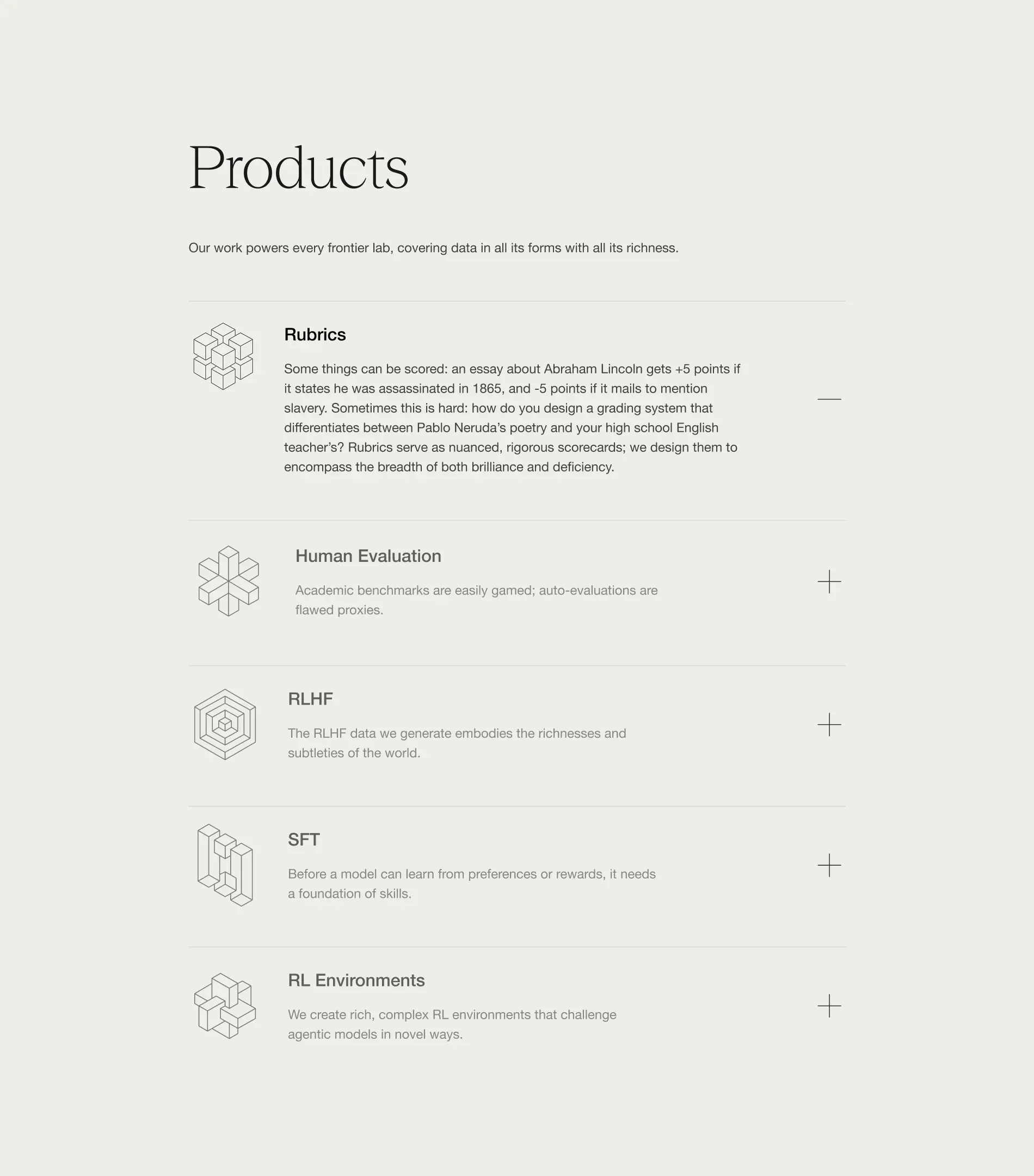



.webp)

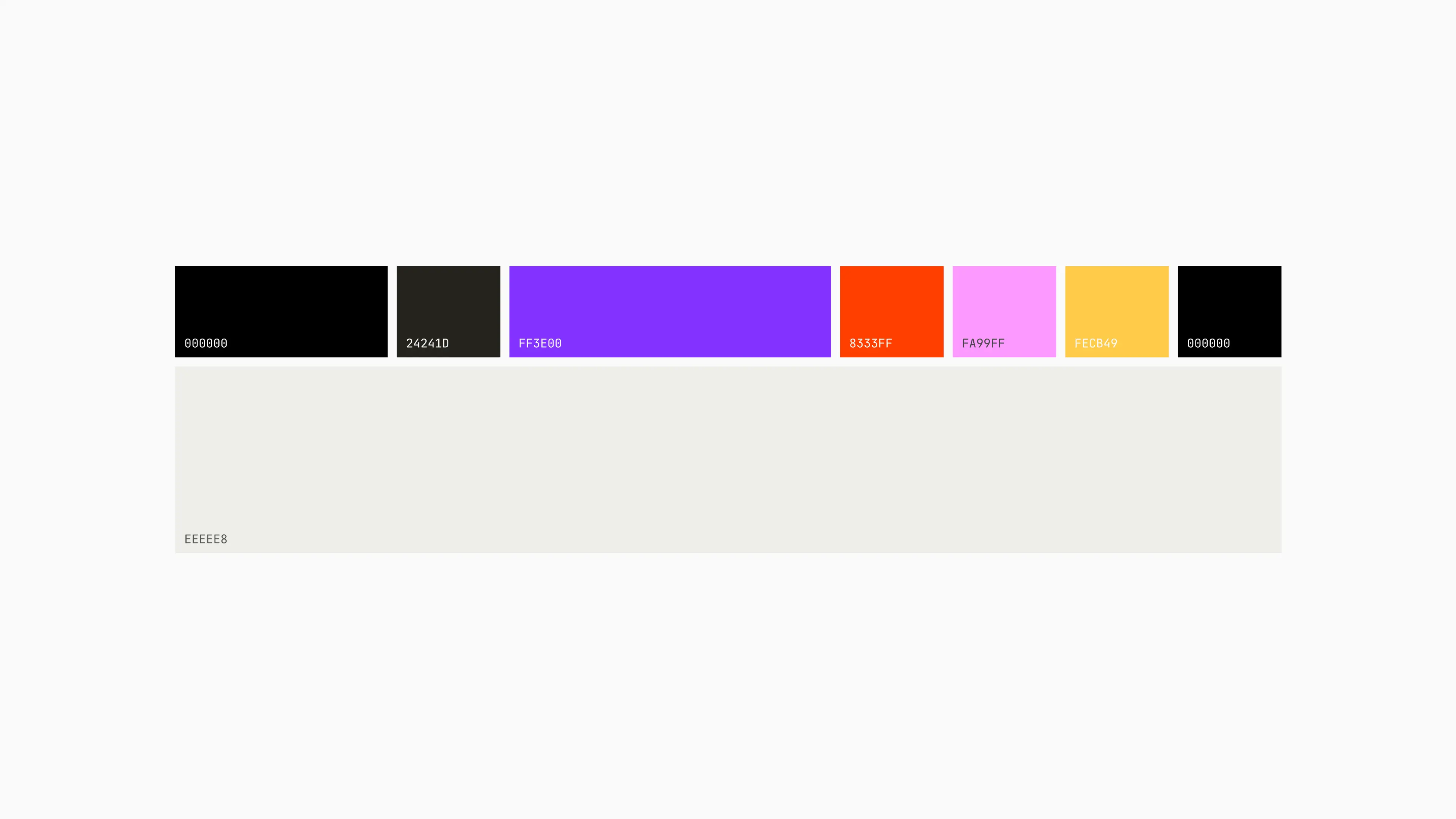
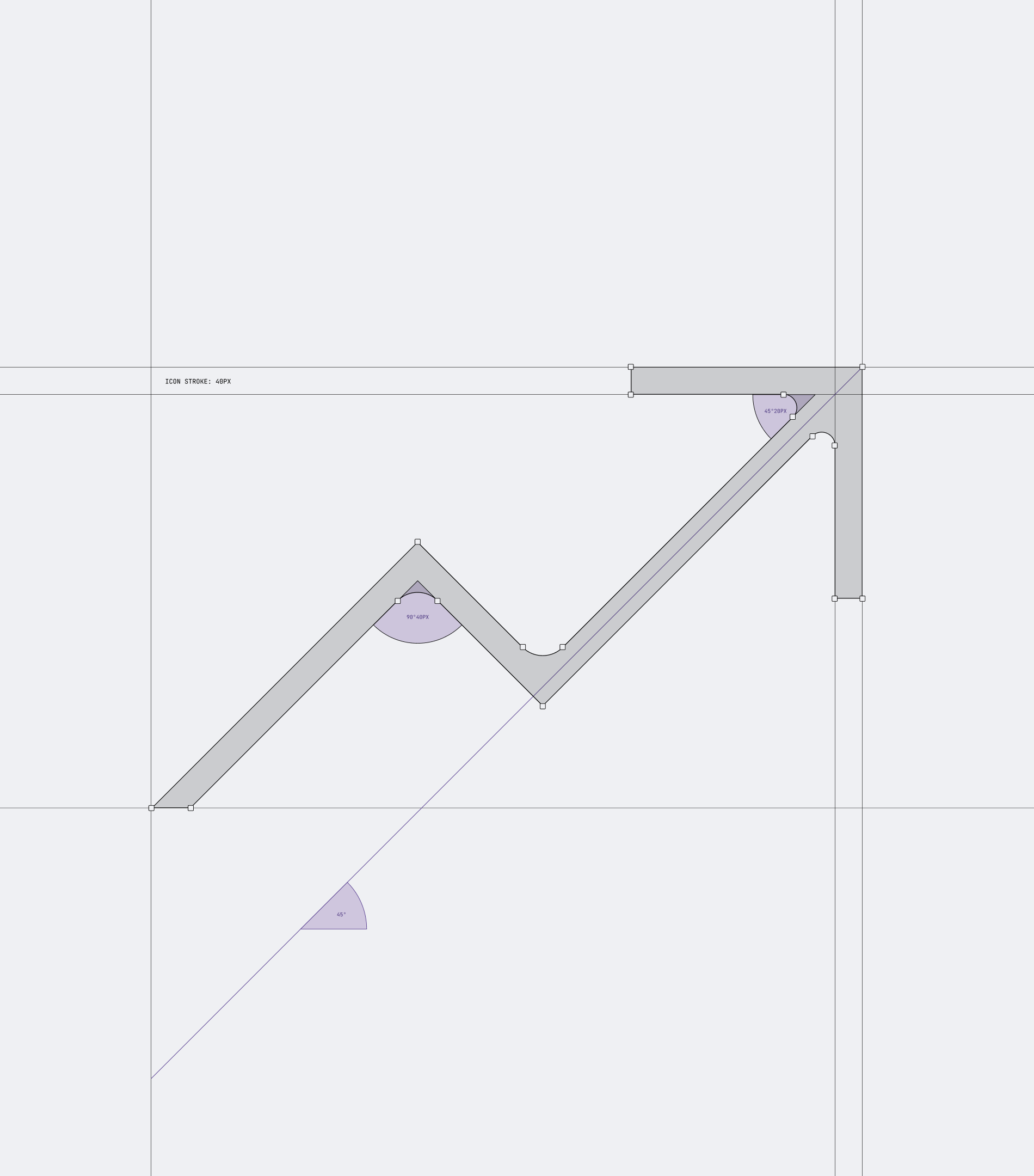



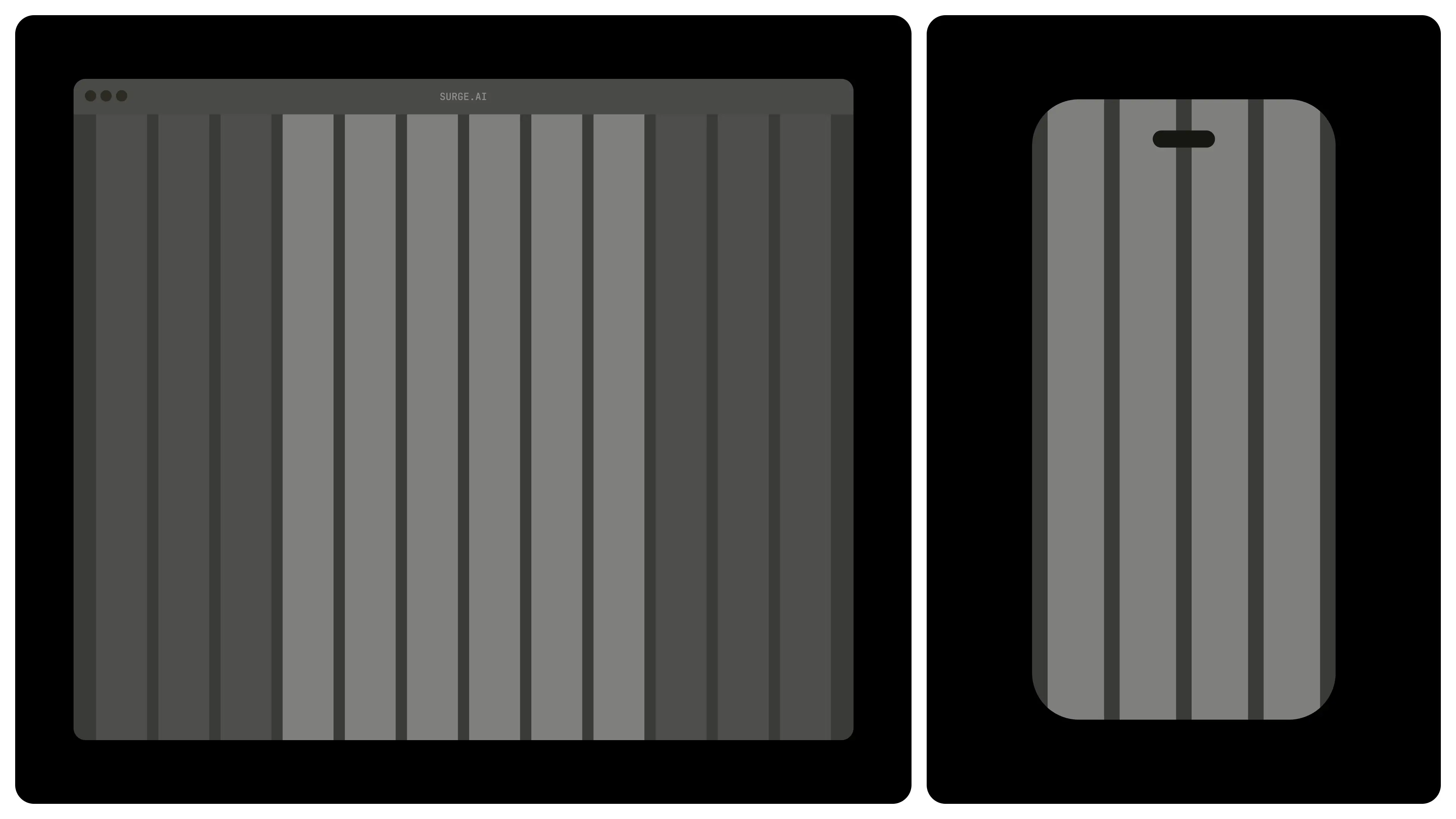
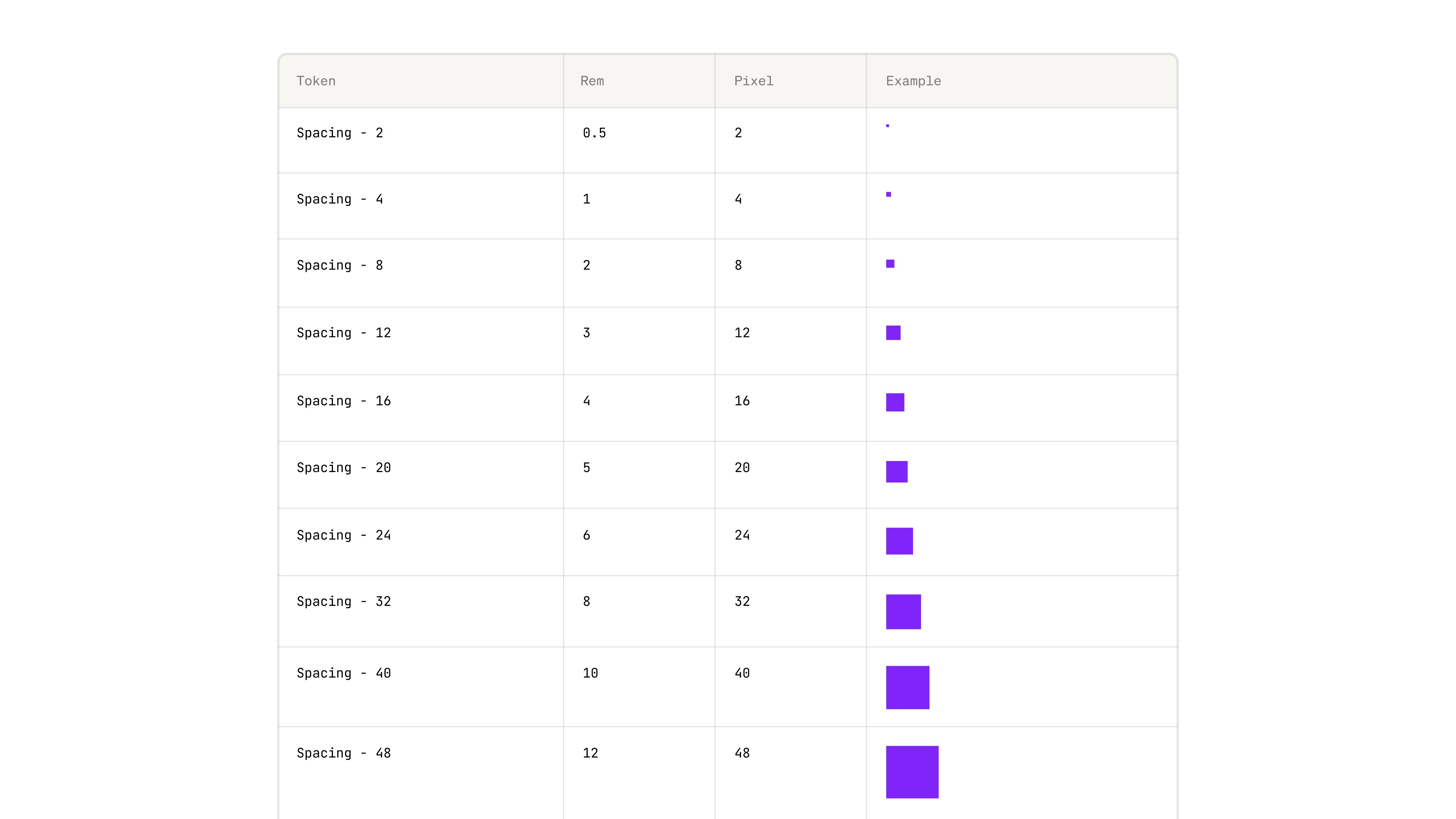
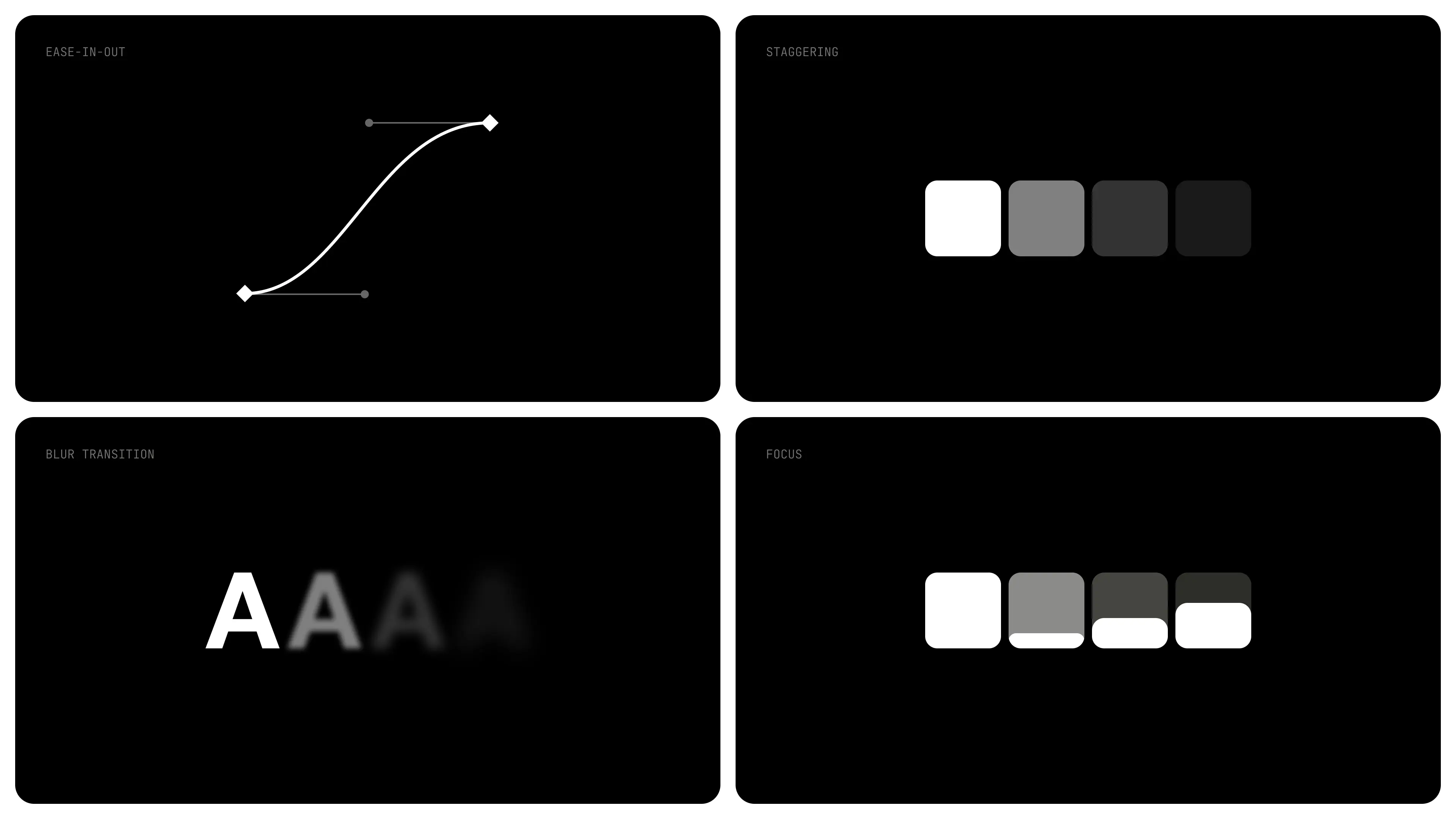
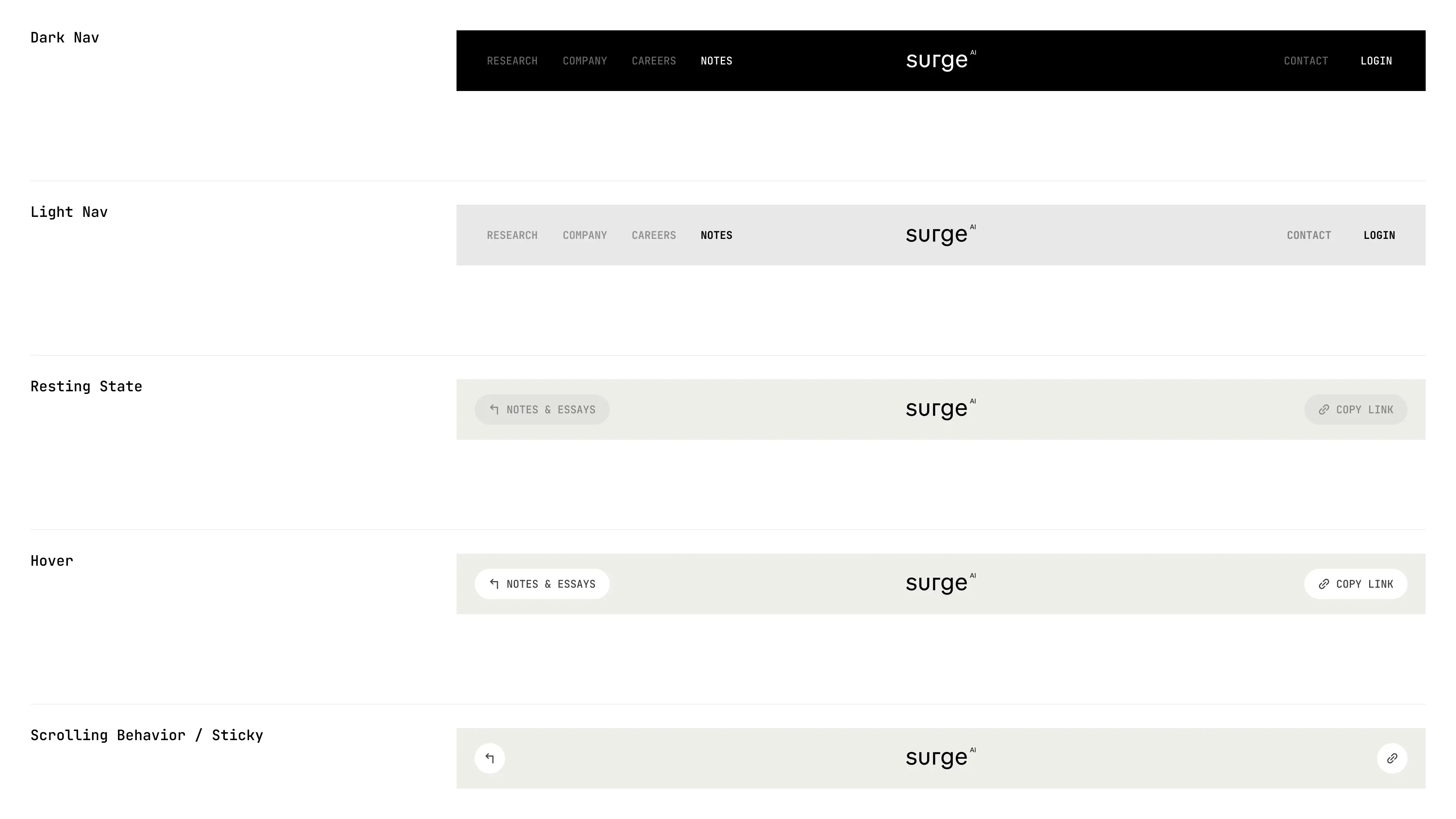

Our collaboration has become a long-term partnership that helped Surge grow from early explorations to a brand adopted by the leading AI and technology companies and a product internationally recognized and awarded.
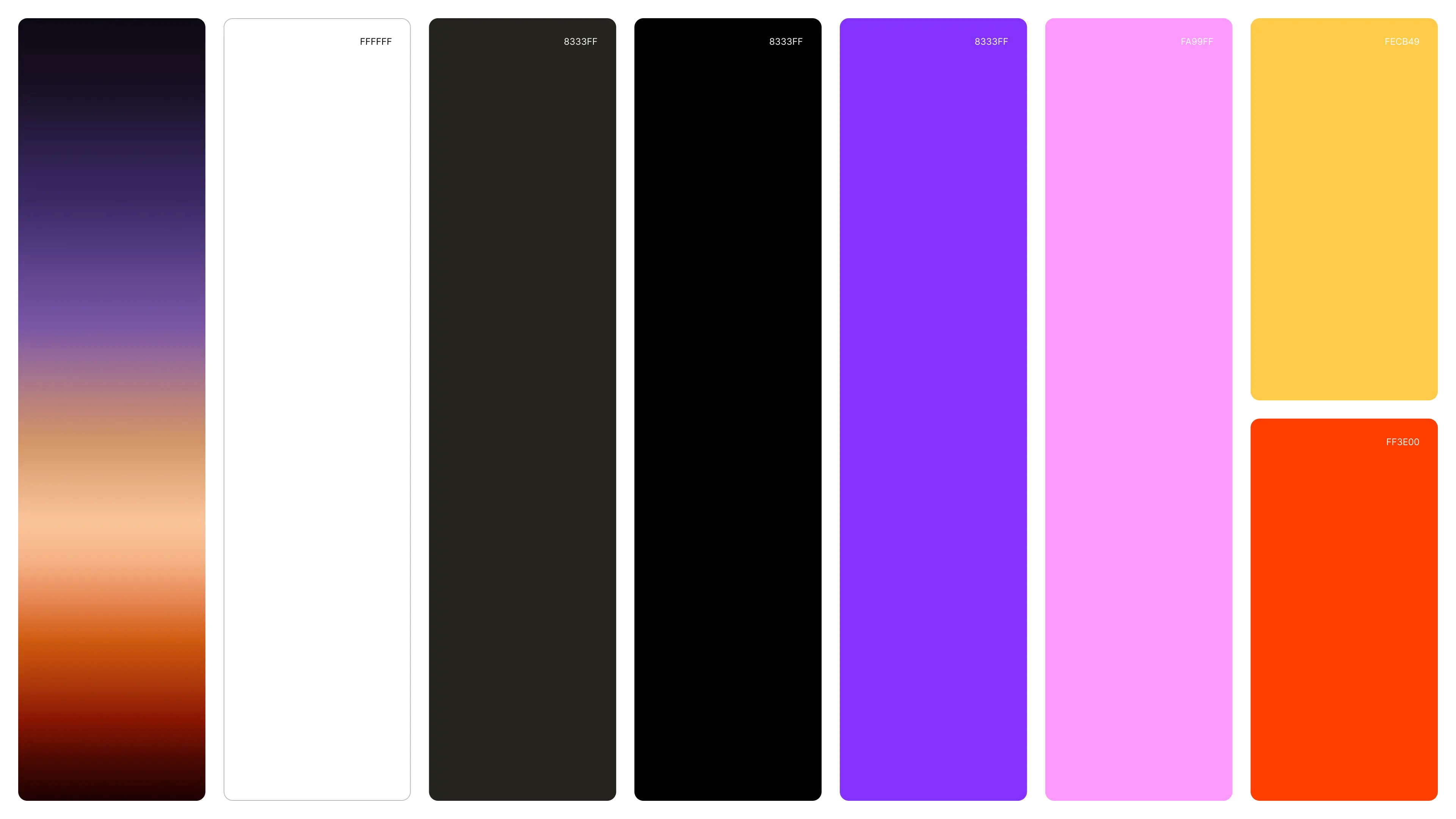
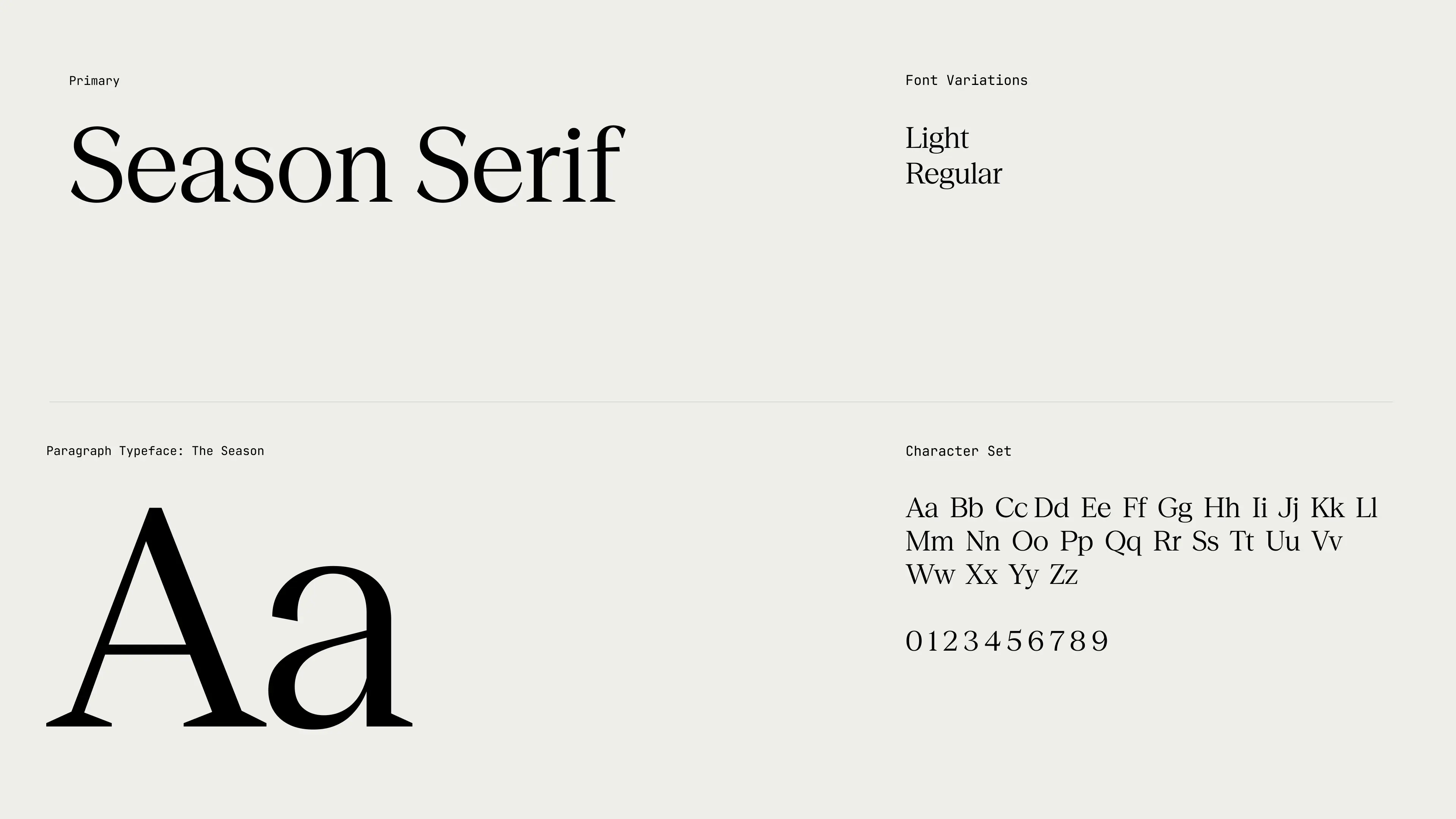
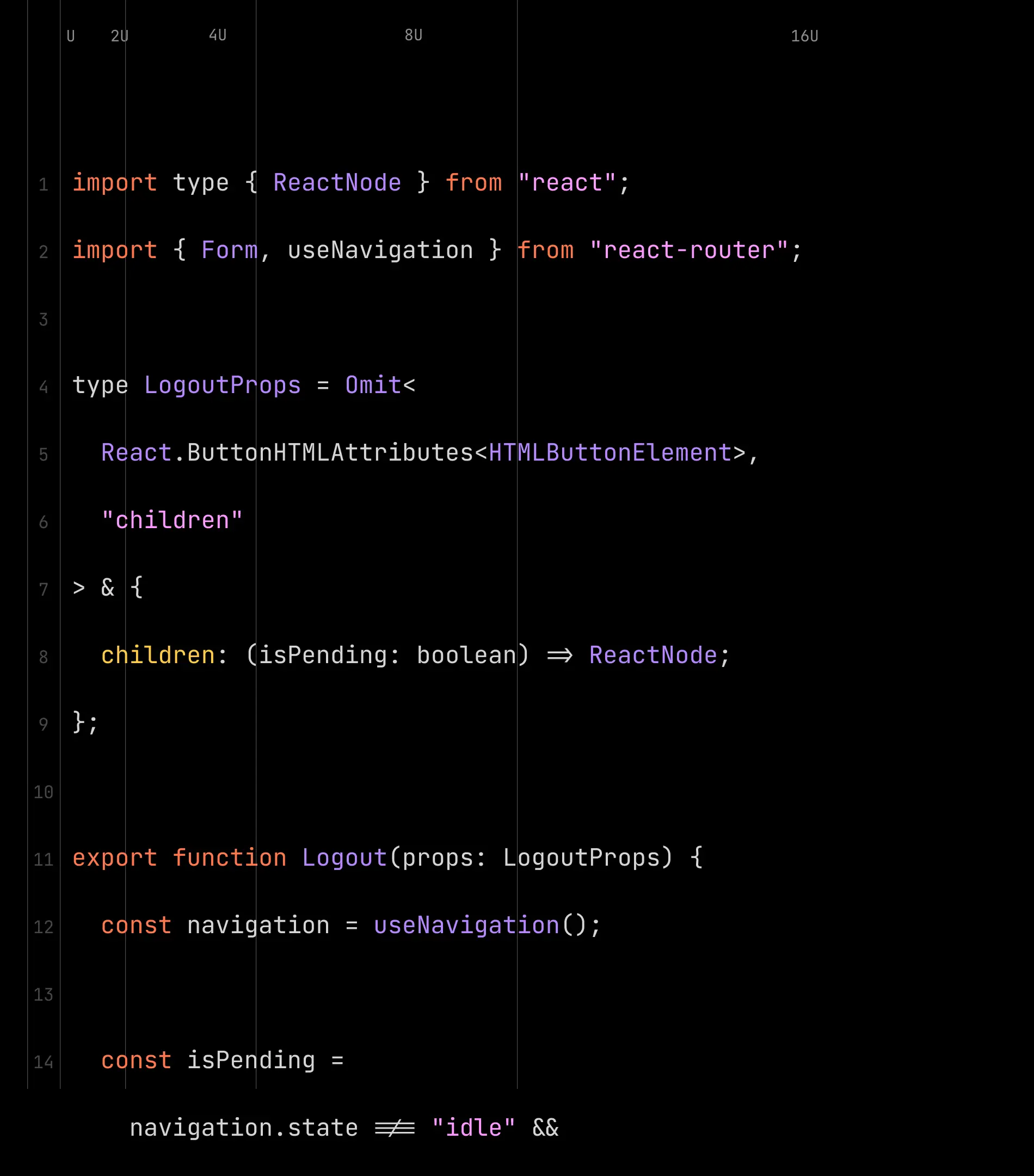
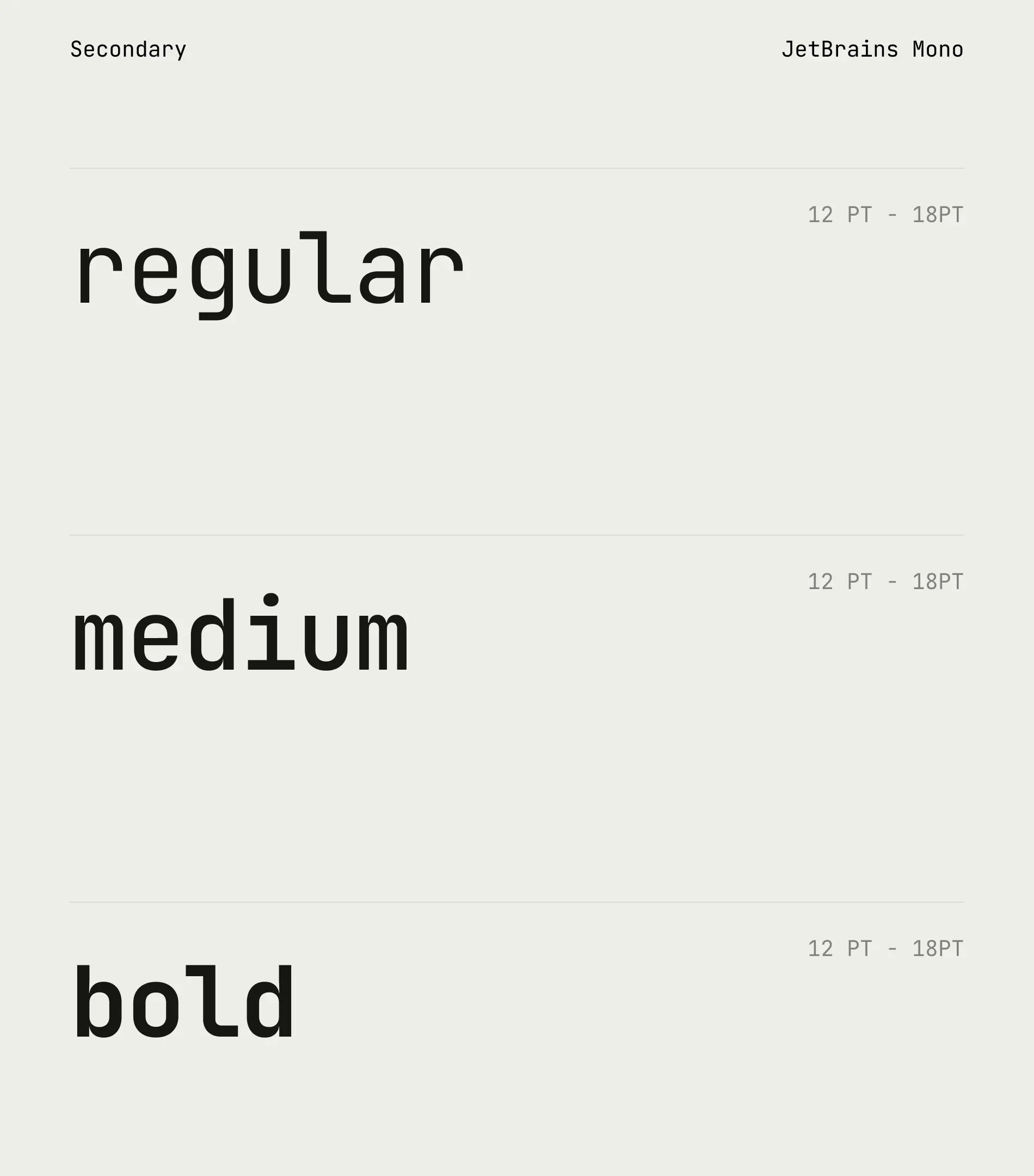
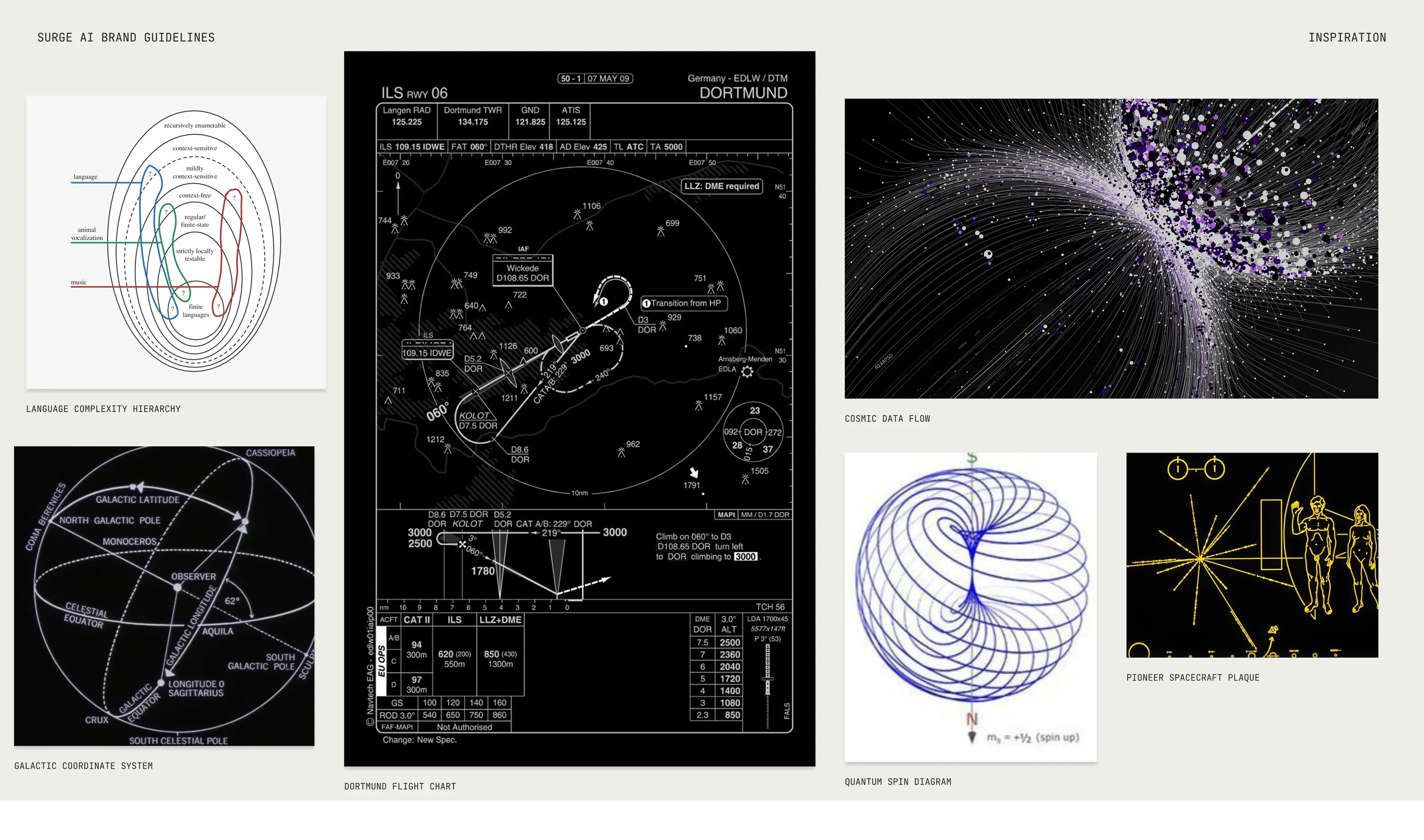
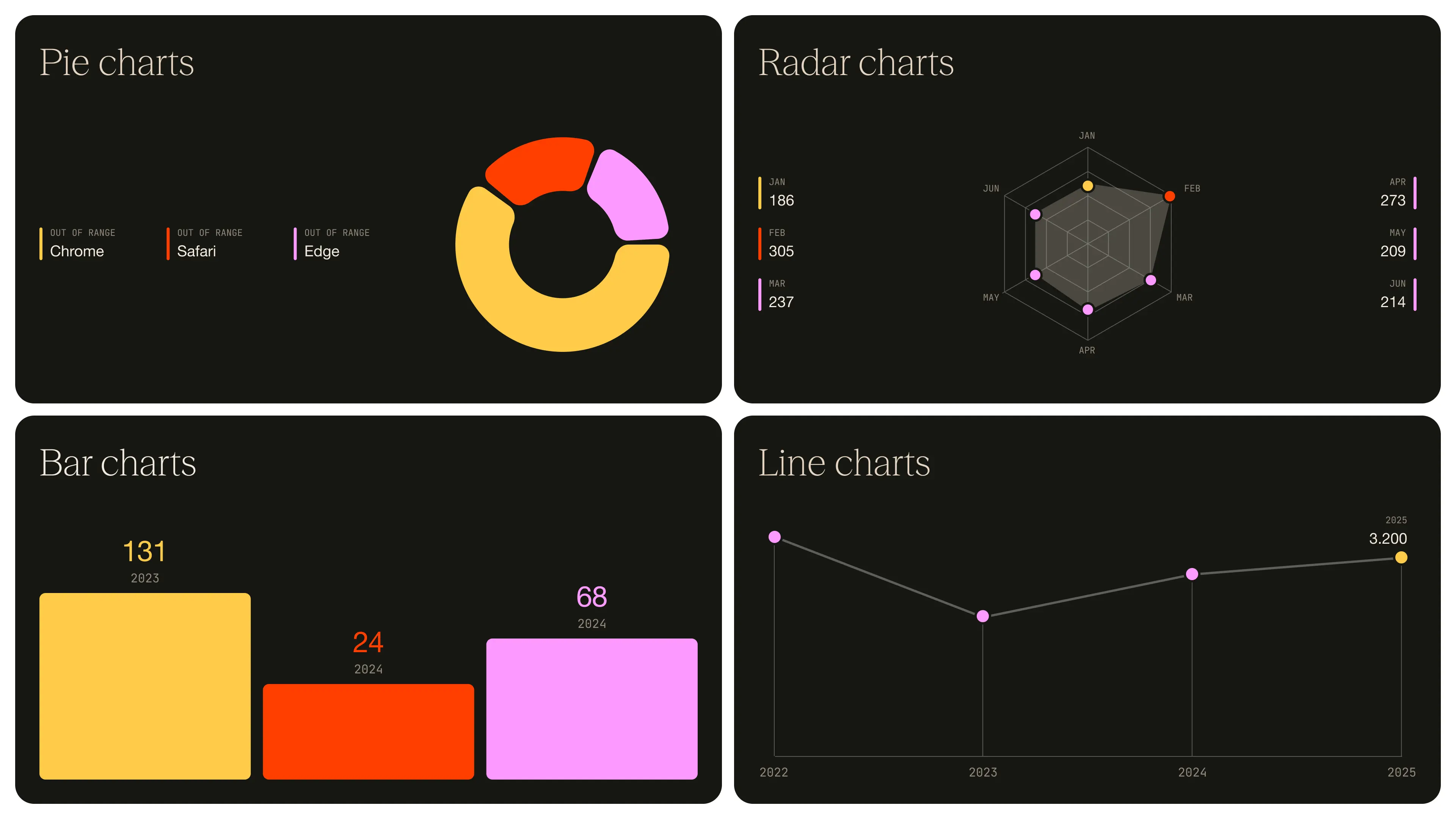
We built a bold, distinctive identity in an industry defined by sameness, designed a product experience that balanced delight with enterprise-grade usability, and crafted a design system to keep them consistent as they scaled.
As Surge now looks to fetch a valuation of over $15 billion in its first capital raise, we’re leading phase two of their branding. The goal: to build a brand that not only wins attention and trust, but one that matches the ambition and credibility of a company operating at that scale.
- Founder - Edwin Chen
- Year - 2025
- Industry - Artificial Intelligence
- Scope - Brand · Site · Systems
- Website - www.surgehq.ai

ComPsych needed a rebrand built to win. Younger competitors with sharper, design-driven branding were pulling attention away from the world’s largest provider of employee assistance programs (EAPs), a company supporting over 130 million people across 190 countries. They turned to Konpo to make sure their brand matched their scale and credibility. The mission: win back market share, turn reputation into loyalty, and defend their position at the top.
.webp)
.webp)
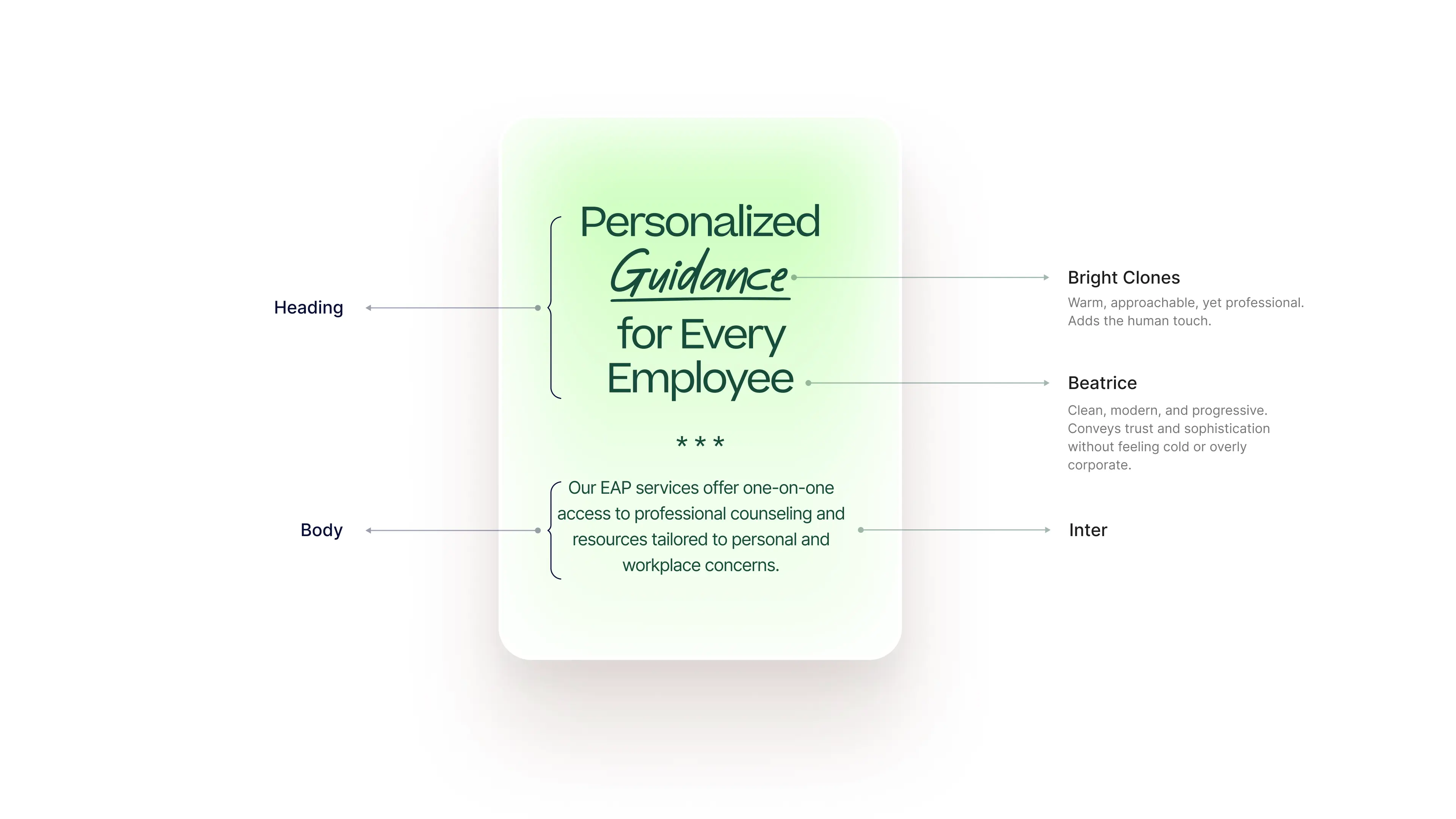
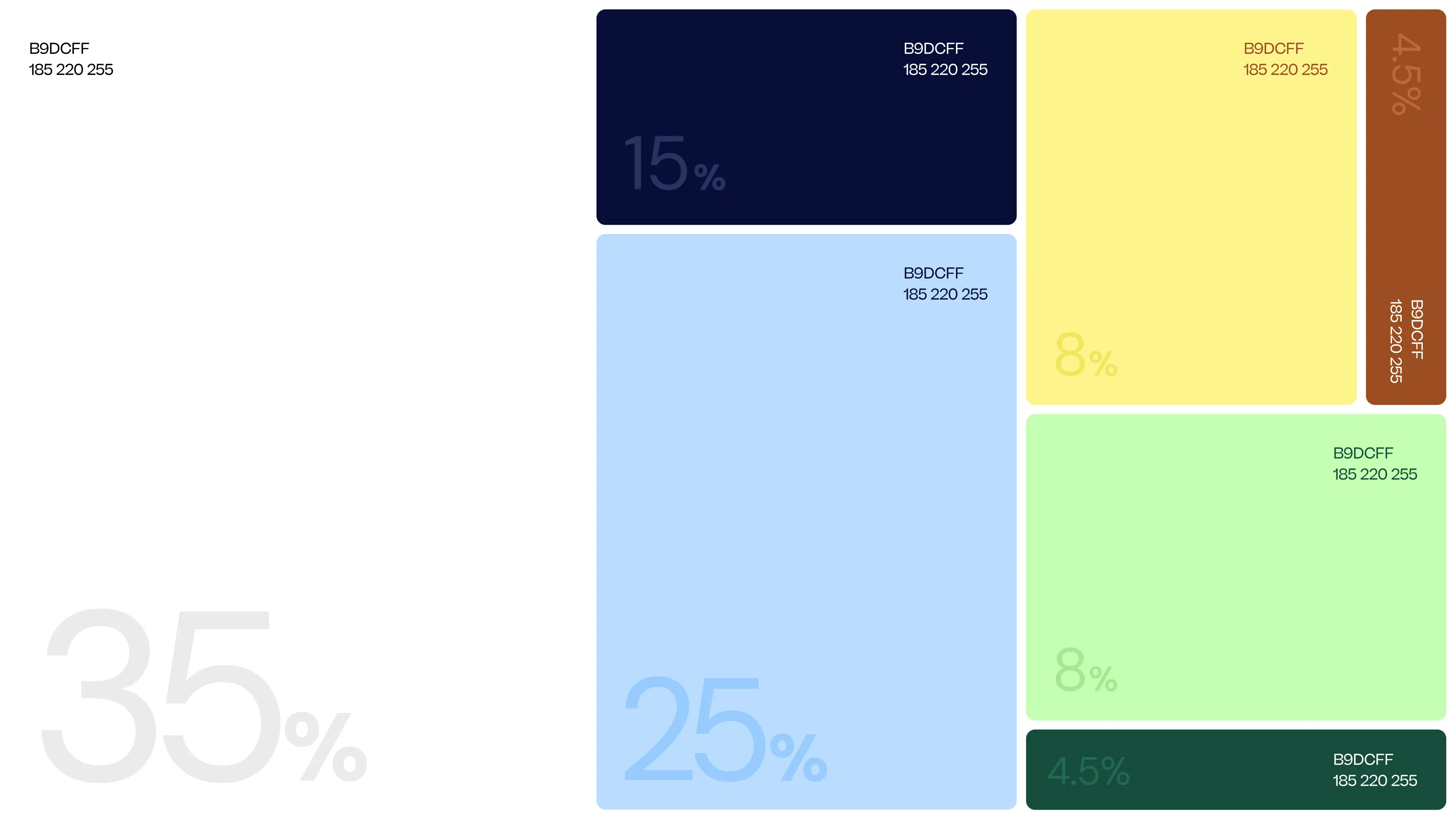

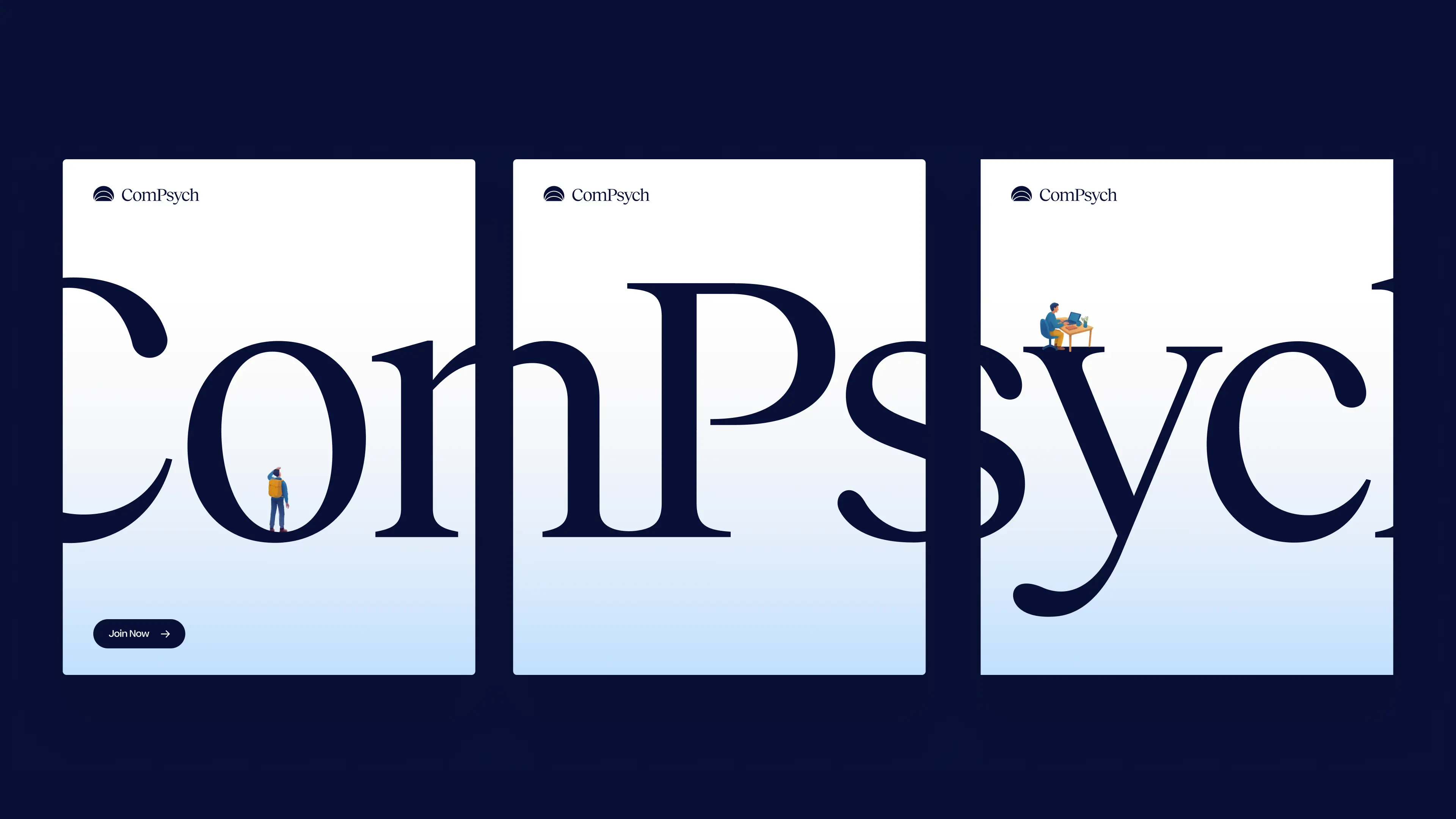
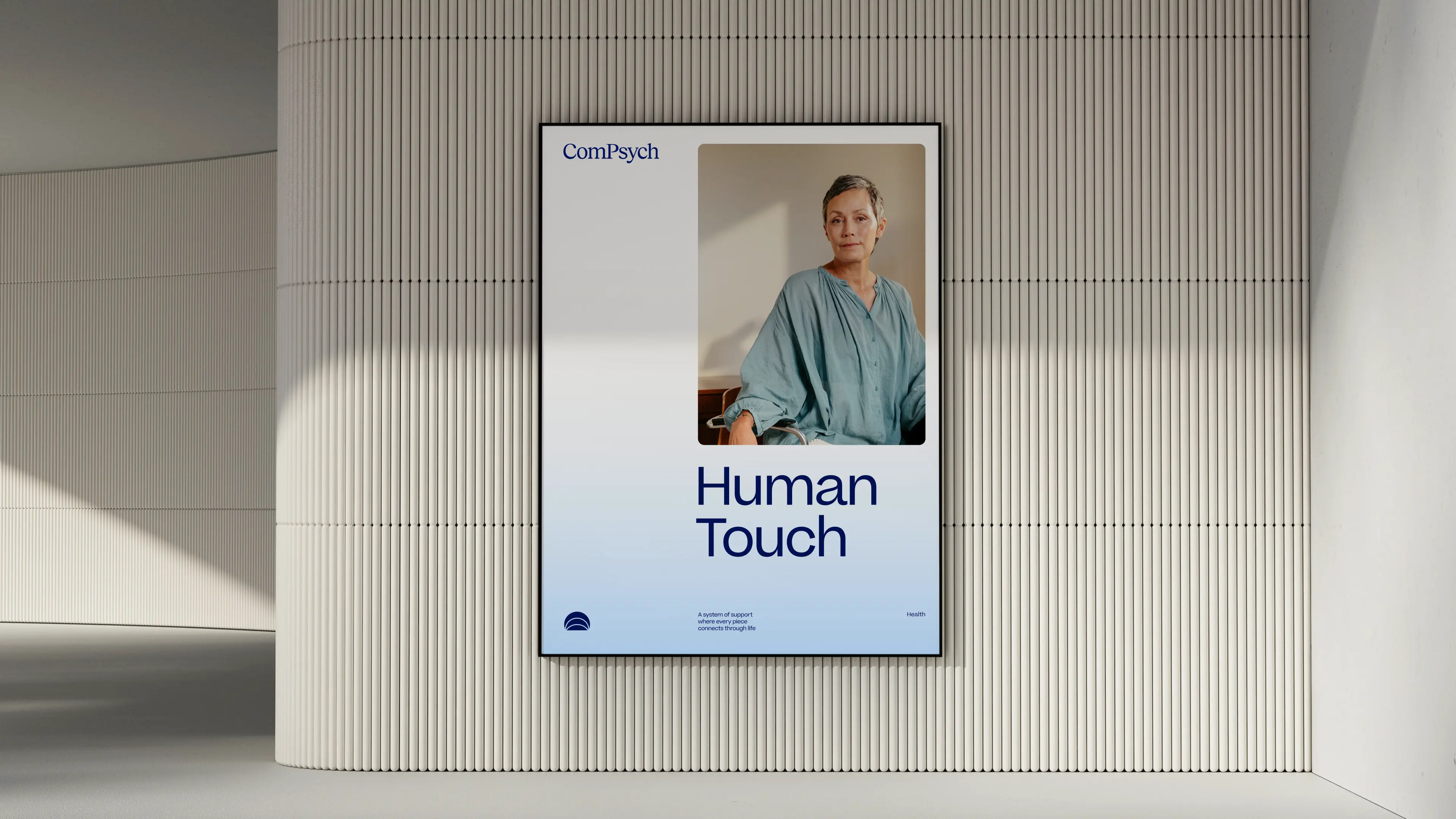
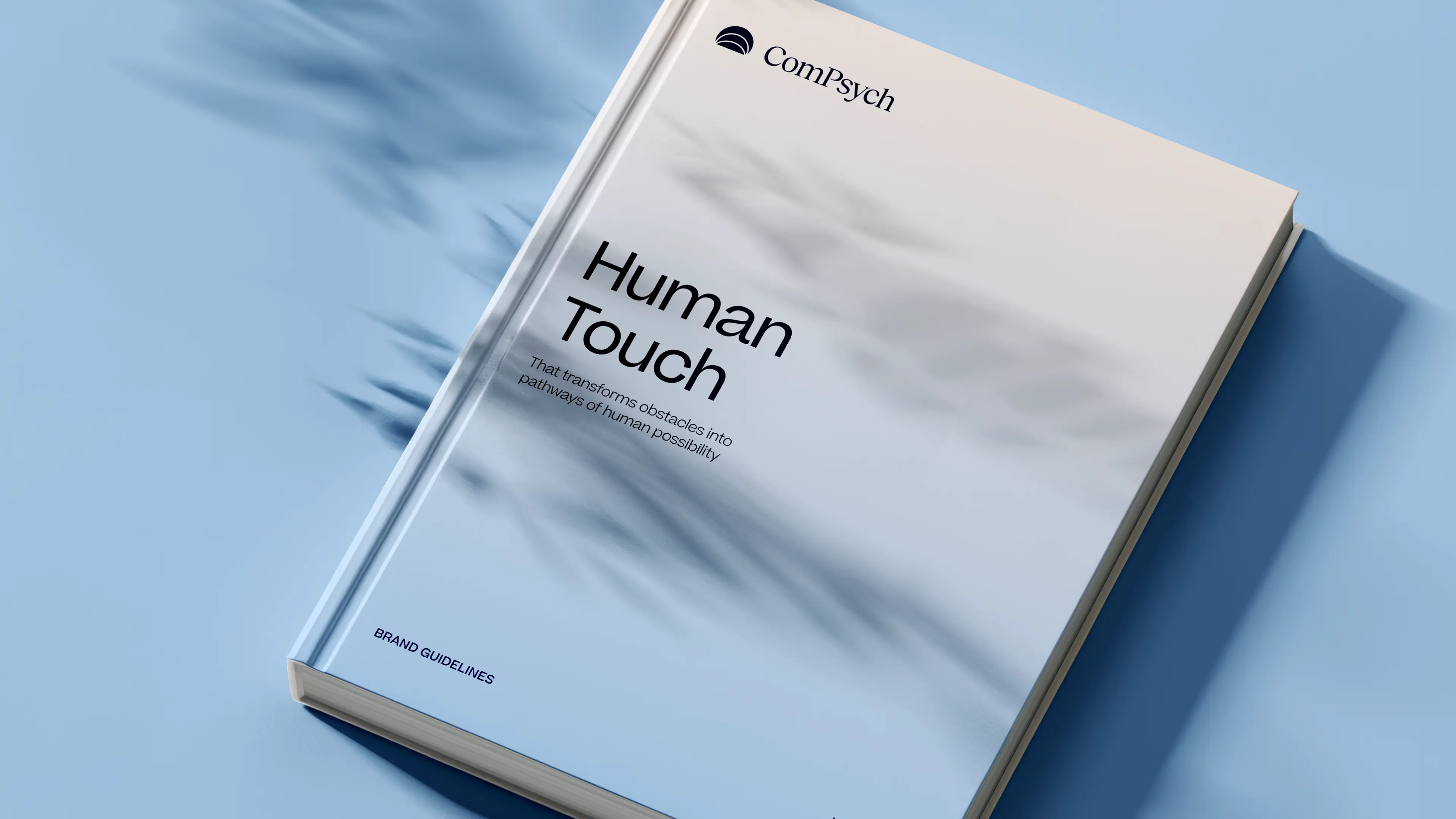
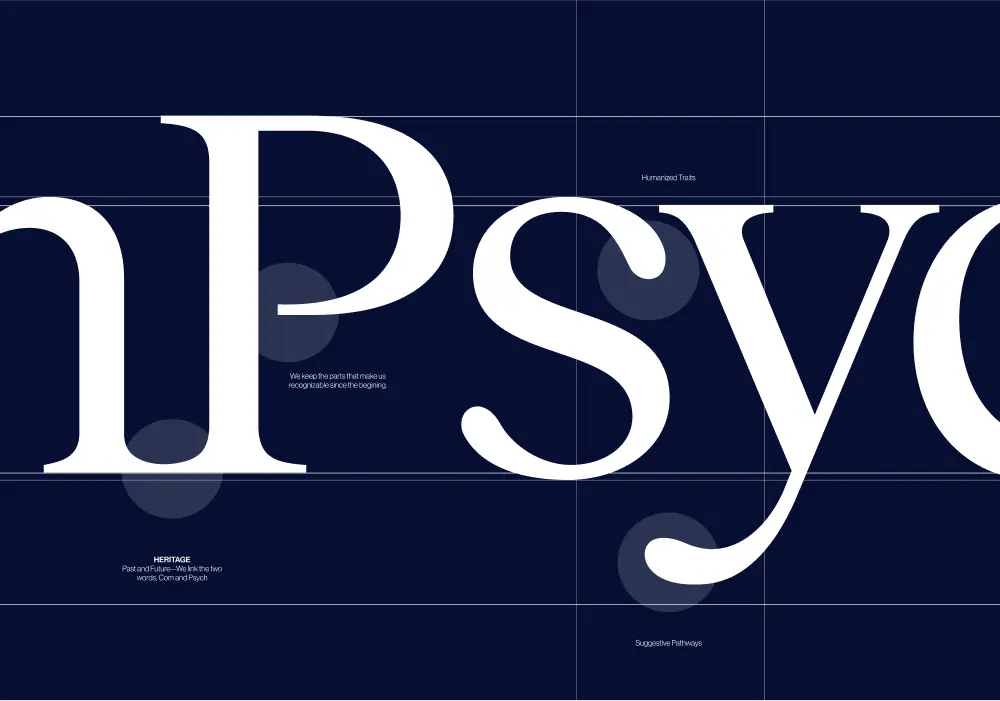
Every element of the ComPsych rebrand was built to show the strength of a category leader, but for today’s market and tomorrow’s. The new logo centers on a glowing core, with expanding ripples signalling growth, support, and scale. Their signature blue was sharpened with a modern palette designed to stand out with confidence, not noise. But what’s a rebrand without discipline to execute it? We built a dedicated brand hub that gave ComPsych everything, from logos to illustrations to voice, to apply their new identity consistently across 75,000+ organizations worldwide. And we delivered it beyond our original scope. The result: a brand that doesn’t just keep up with the competition, but takes back the lead. With a stronger identity and a system to sustain it, ComPsych now has the edge to defend its dominance and keep winning in a design-driven market.
- Industry - Employee Assistance Program (EAP)
- Scope - Brand
- Brand Hub - compsych.konpo.co
- Website - compsych.com
amp Fitness set out to launch its AI-powered strength training system with leadership and talent from Apple, DraftKings, Meta, Nike, and Spotify — people who held the highest design standards. To stand out in a crowded fitness space, they needed a design partner who could move as fast as they did and deliver world-class quality. That’s where Konpo came in. As their plug-and-play design studio, we worked elbow-to-elbow with Amp’s leadership to marry hardware and software into a seamless consumer experience. From product design to scalable design systems, we turned their ambitious vision into award-winning, user-loved reality. When the standards are highest, the right design partner makes all the difference.
.webp)
%201.webp)
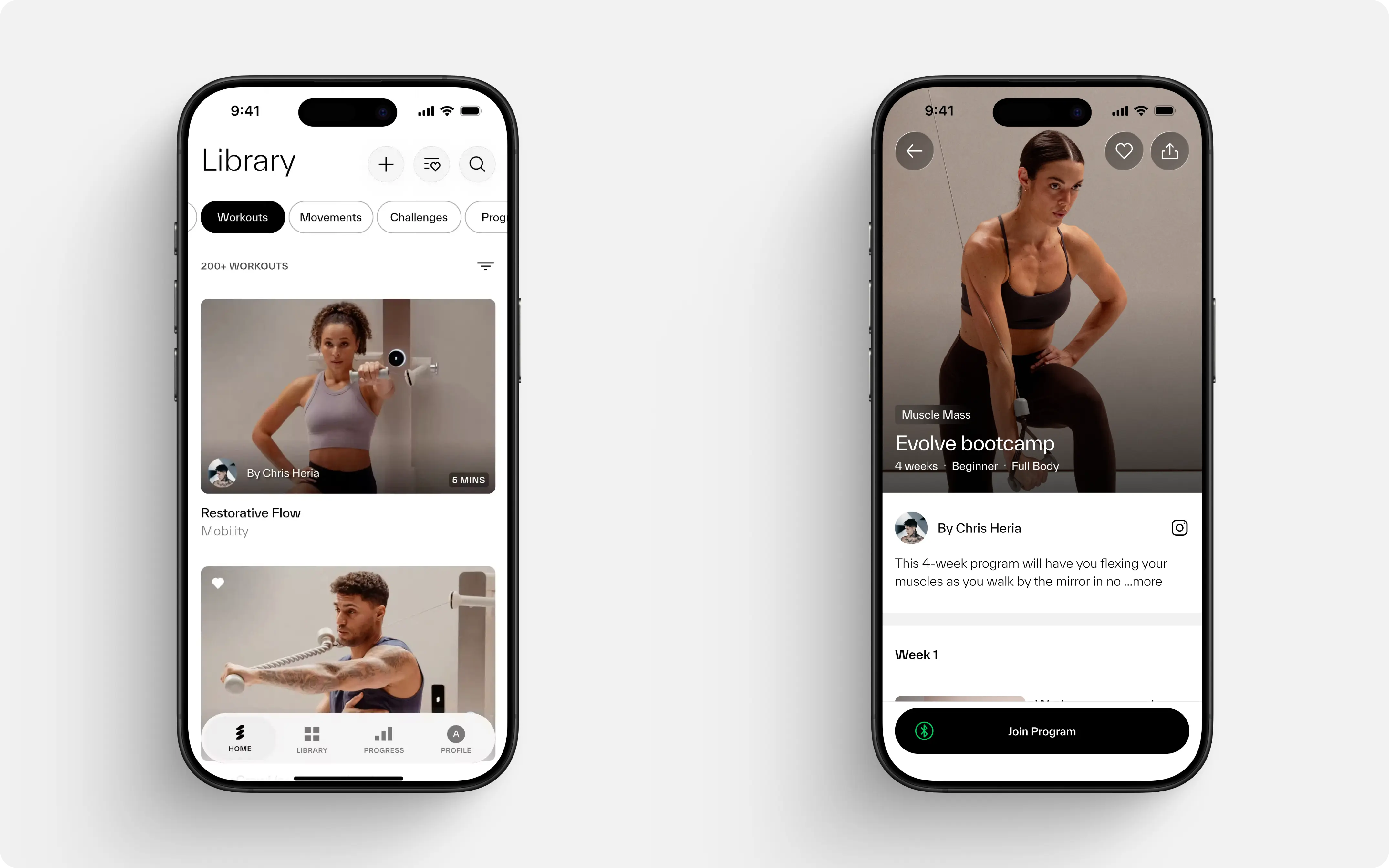
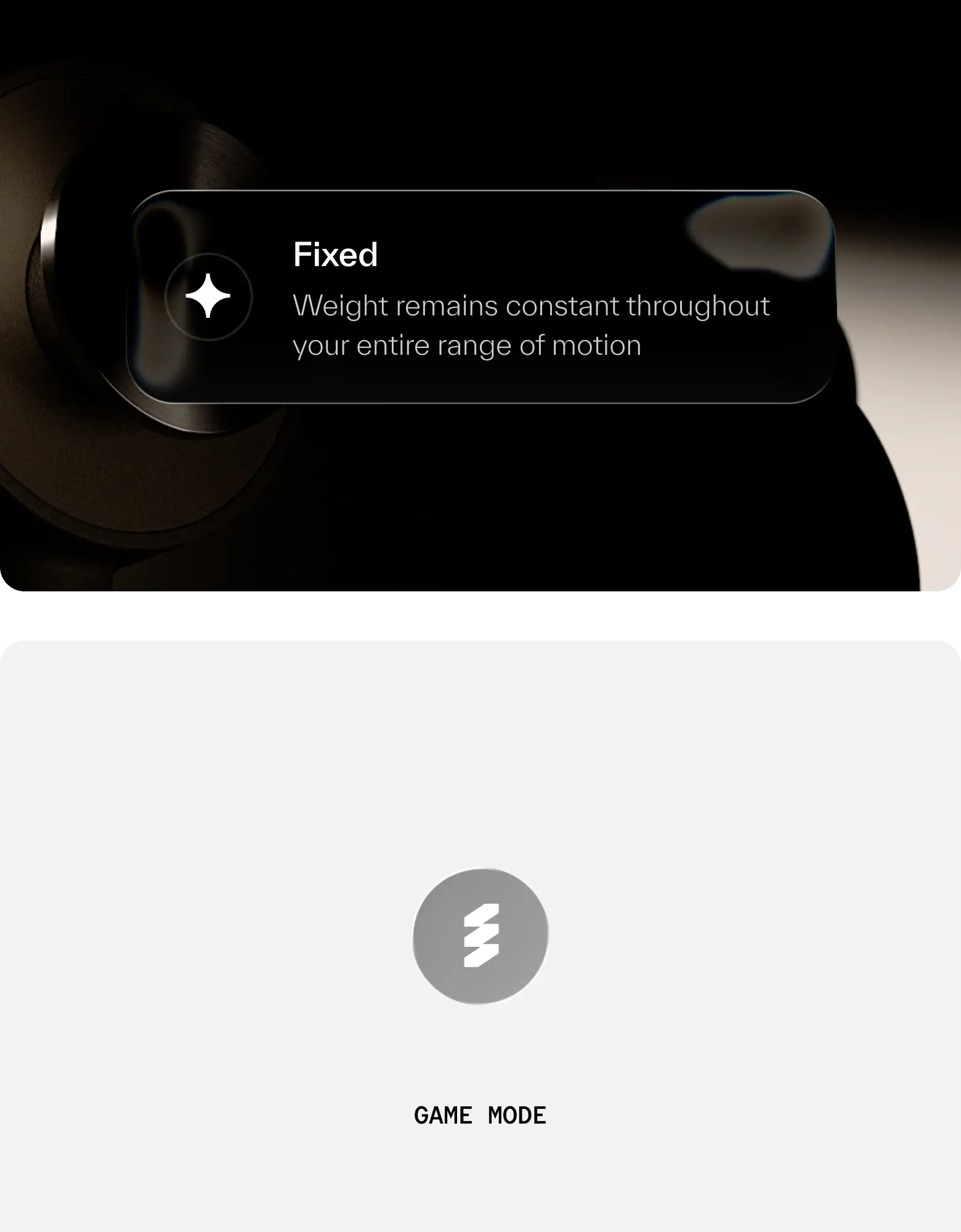
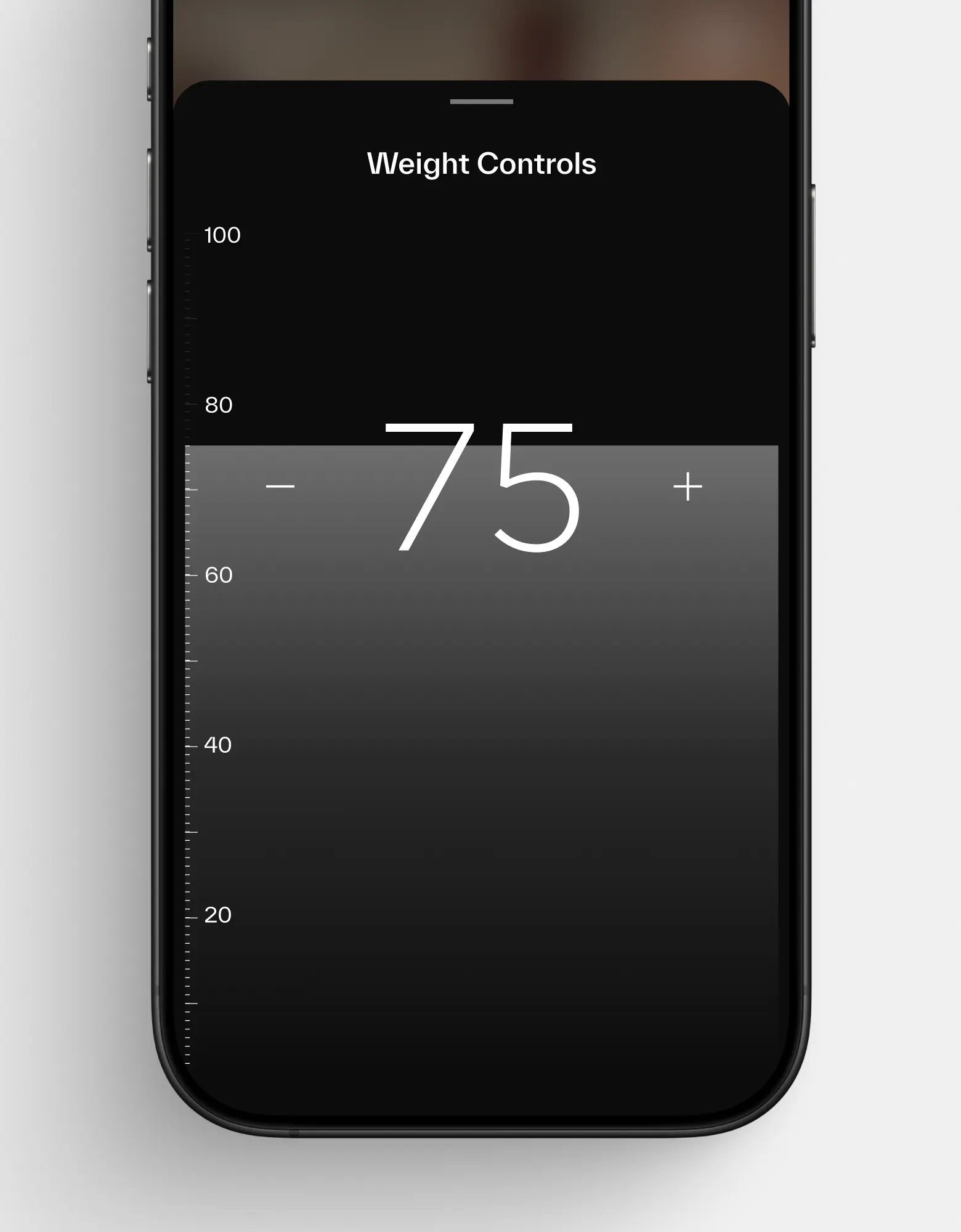
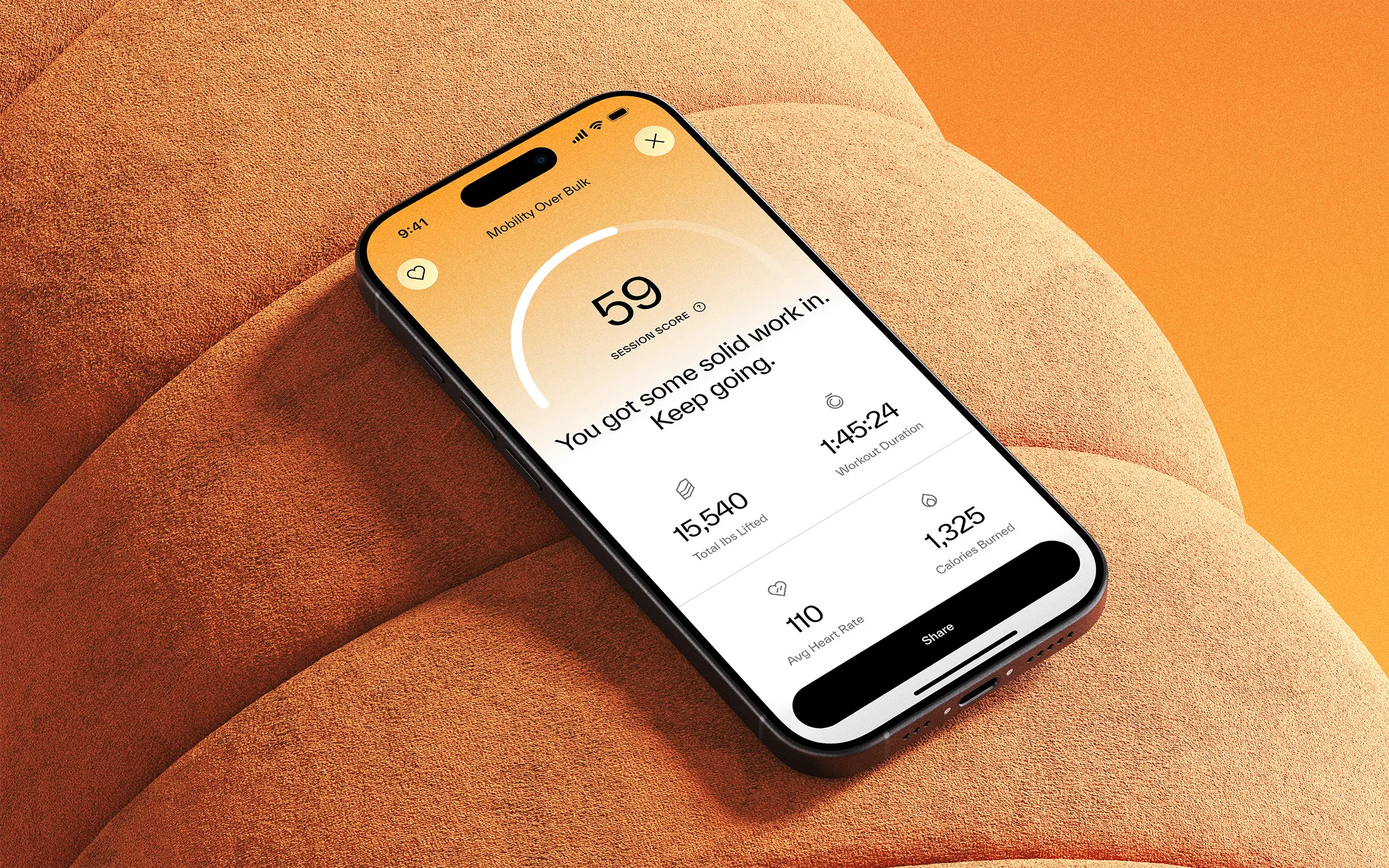

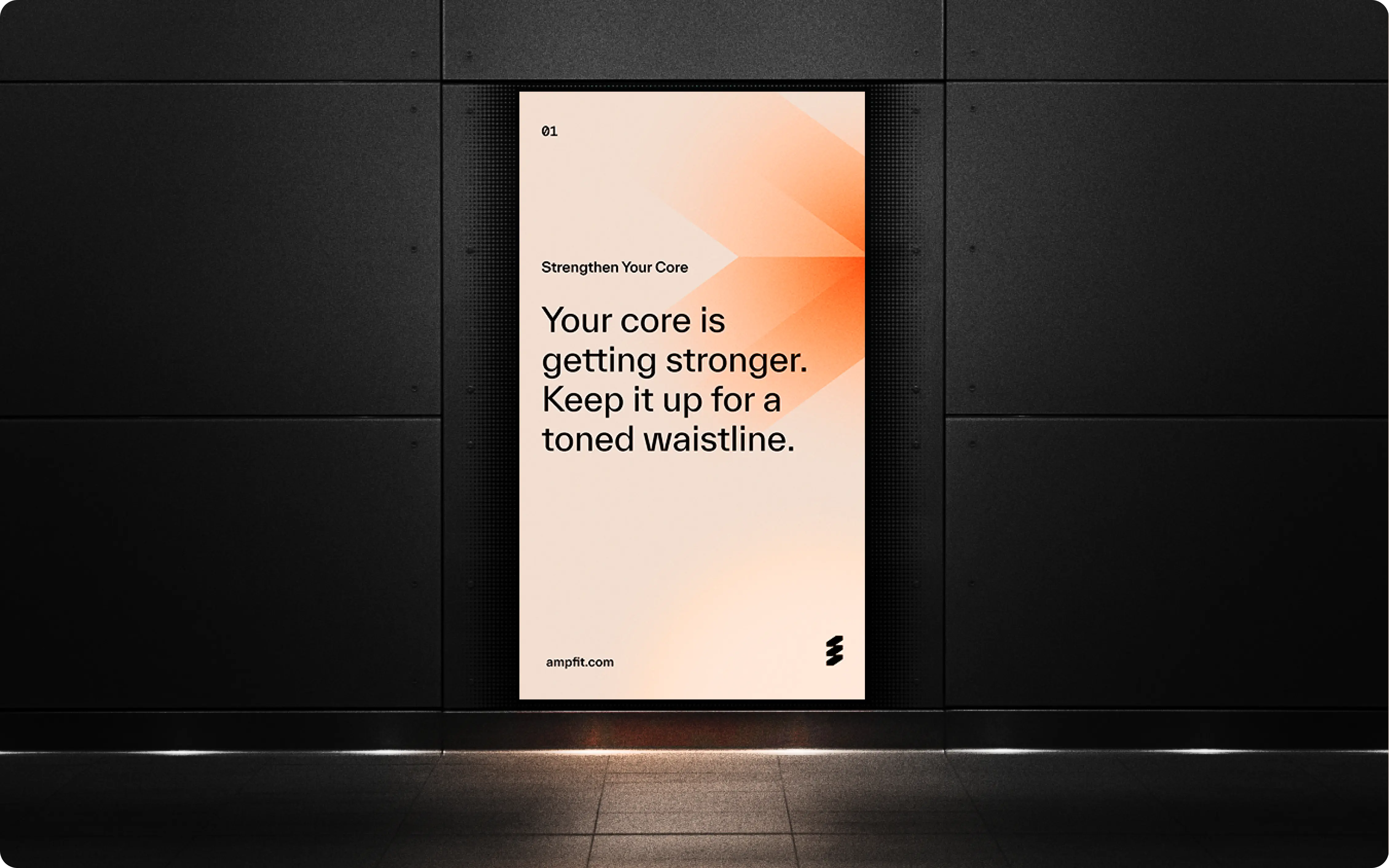
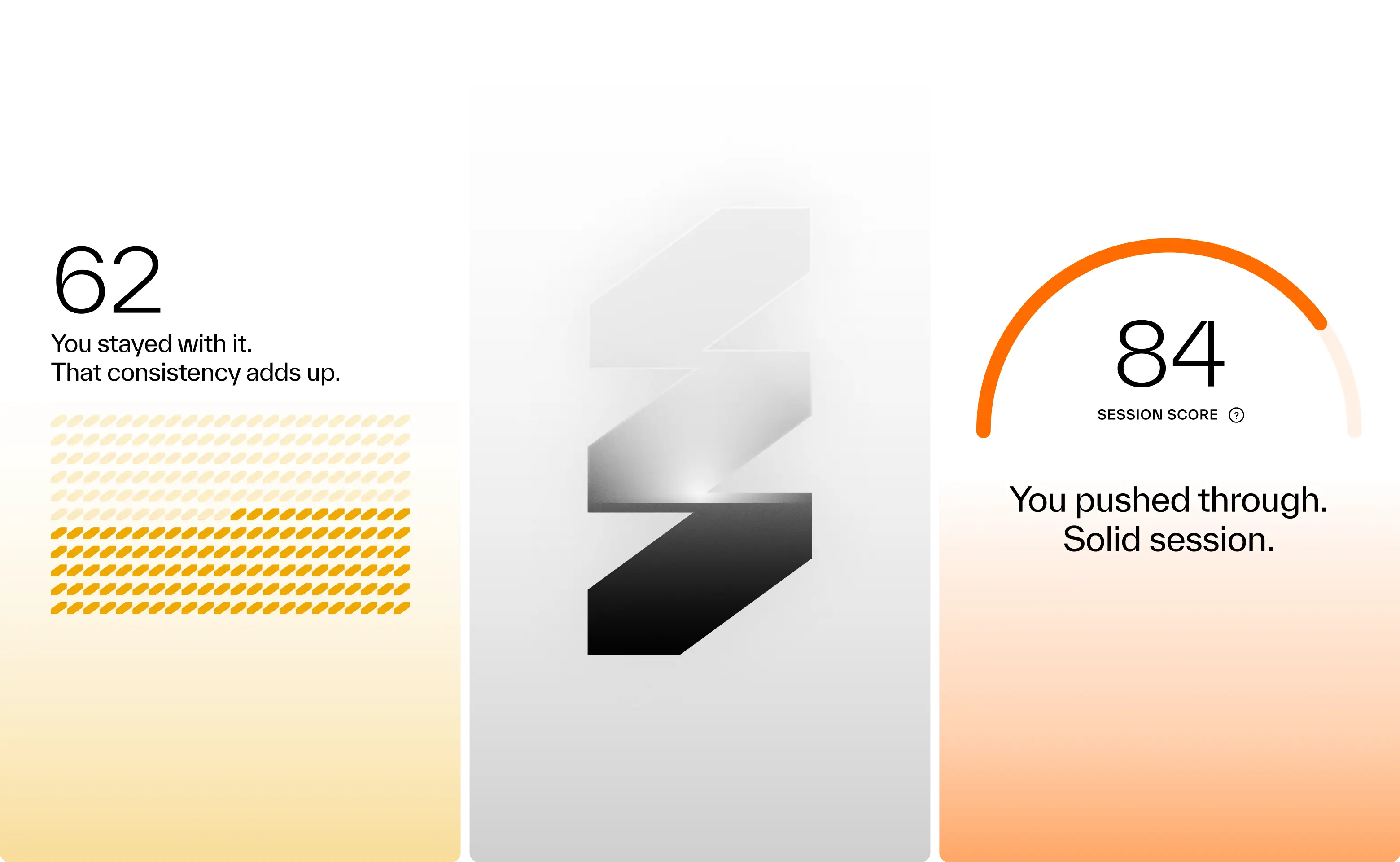

Results so far: 40,000 users, multiple awards, and a sleek wall-mounted system paired with a companion app. Working with amp meant translating adaptive resistance hardware, smart coaching, and modular accessories into a cohesive consumer experience. Add to that a team backed by Sports Science PhDs and leaders from Apple, Meta, and Nike, and the expectations were clear: nothing short of excellence would do. Rising to that challenge not only delivered results for amp, but pushed Konpo to sharpen our own systems and raise the bar. Challenge accepted. Mission accomplished.
- Founder - Shalom Meckenzie
- Year - 2024
- Industry - Fitness · Artificial Intelligence
- Scope - Brand · Product · Systems
- Website - www.ampfit.com
A Matter of Taste.

Ever had a room sit empty for months? Or worse: full of furniture, and still not quite you? First Chair fixes both. Snap a photo, see the room you had in mind, buy the actual pieces. Behind it is Amir Levanon, co-founder and CEO. He came from Apple, and we'd already had a little rodeo together at amp, so he knows a thing or two about design. When his next company needed a brand, he called. It didn't even have a real name yet. Amir wanted it mobile first, easy to read and welcoming to anyone with a living room. Oh, and it had to be good.
Ever had a room sit empty for months? Or worse: full of furniture, and still not quite you? First Chair fixes both. Snap a photo, see the room you had in mind, buy the actual pieces.
Behind it is  Amir Levanon, co-founder and CEO. He came from
  Apple, and we'd already had a little rodeo together at
  amp, so he knows a thing or two about design. When his next company needed a brand, he called. It didn't even have a real name yet.
Amir wanted it mobile first, easy to read and welcoming to anyone with a living room. Oh, and it had to be good.
Everyone has taste. Few have the words.
Anyone can picture a room they'd love to live in. Describing it is another story. Most people know exactly what they like (modern, but not cold; warm, but not cluttered) and still end up with 47 open tabs and no sofa.
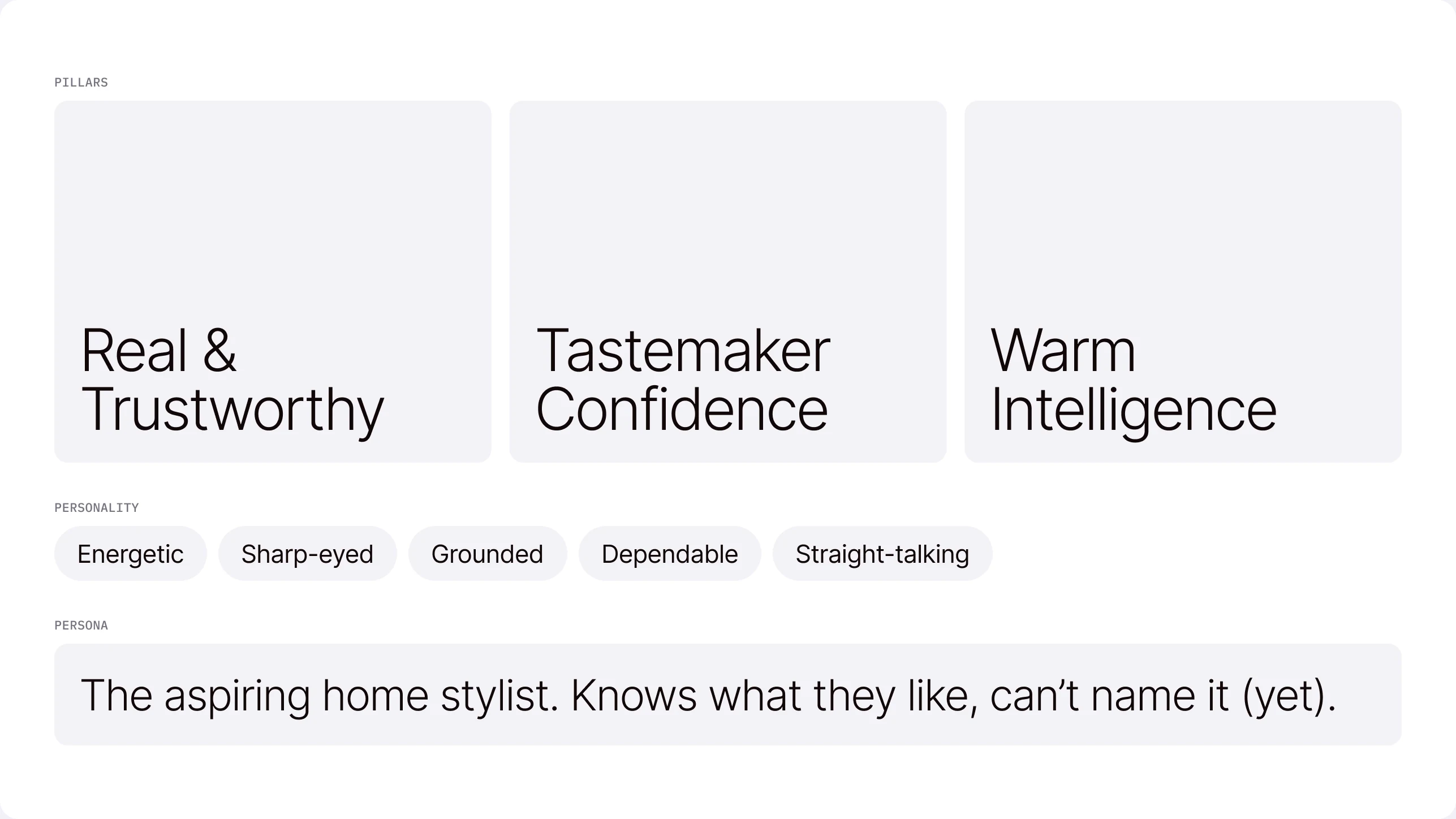
Generating gorgeous rooms was the AI's job. Ours was harder: give people the words, no interior design degree required. So before typefaces or color palettes, we started with a personality: Real & Trustworthy, Tastemaker Confidence, Warm Intelligence.
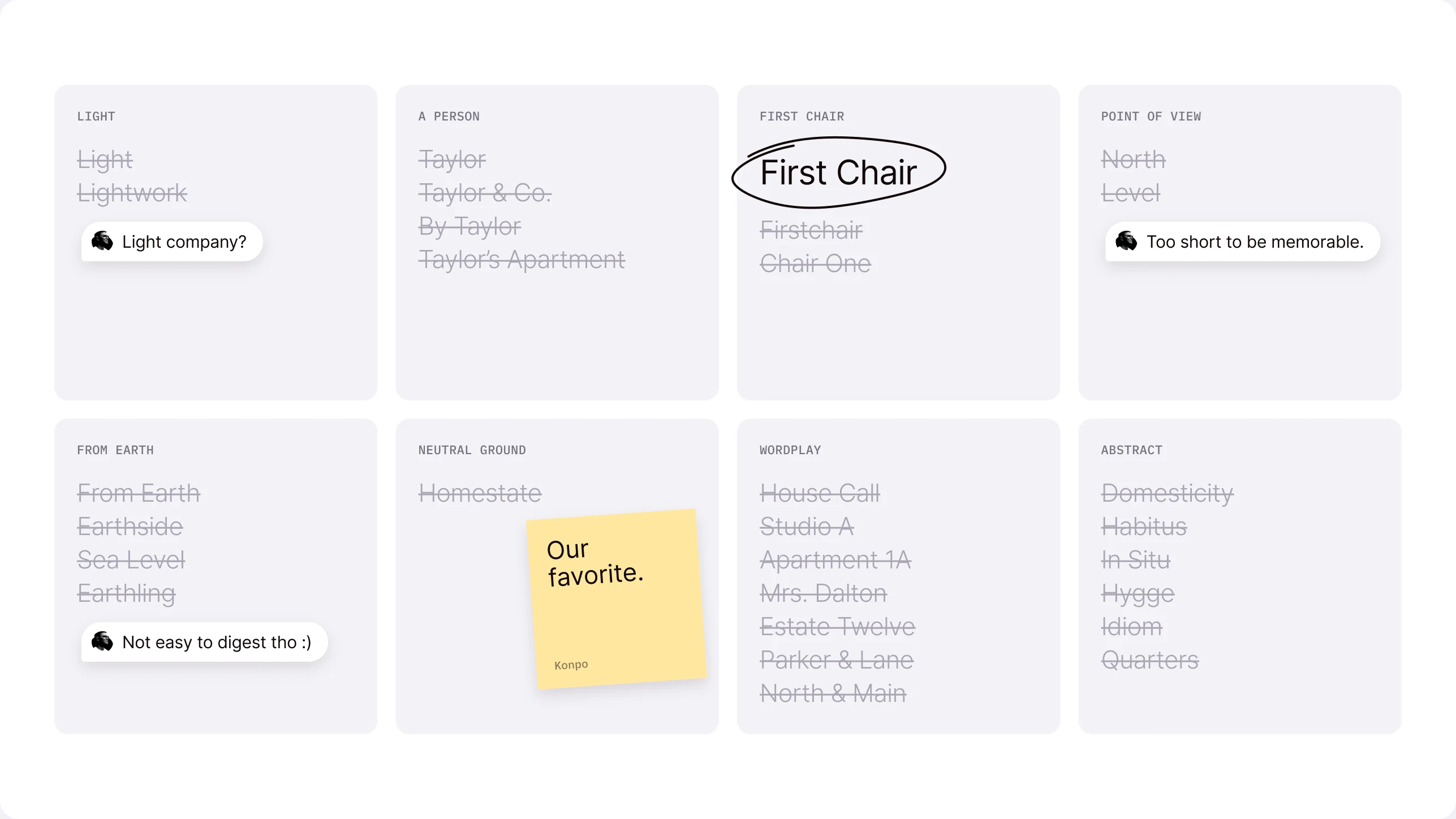
And a name, because the company didn't have the words either. Kassa was only a working title.  Sunny Fassler ran the naming on two rules from Amir: no “AI”, and it had to click with Americans. The names read like a dinner party guest list: Lightwork, Taylor's Apartment, Mrs. Dalton. First Chair won.
Everyone has taste. Few have the words.
Anyone can picture a room they'd love to live in. Describing it is another story. Most people know exactly what they like (modern, but not cold; warm, but not cluttered) and still end up with 47 open tabs and no sofa.
Generating gorgeous rooms was the AI's job. Ours was harder: give people the words, no interior design degree required. So before typefaces or color palettes, we started with a personality: Real & Trustworthy, Tastemaker Confidence, Warm Intelligence.
And a name, because the company didn't have the words either. Kassa was only a working title. Sunny Fassler ran the naming on two rules from Amir: no “AI”, and it had to click with Americans. The names read like a dinner party guest list: Lightwork, Taylor's Apartment, Mrs. Dalton. First Chair won.
 Sunny Fassler
From raw material to living room.
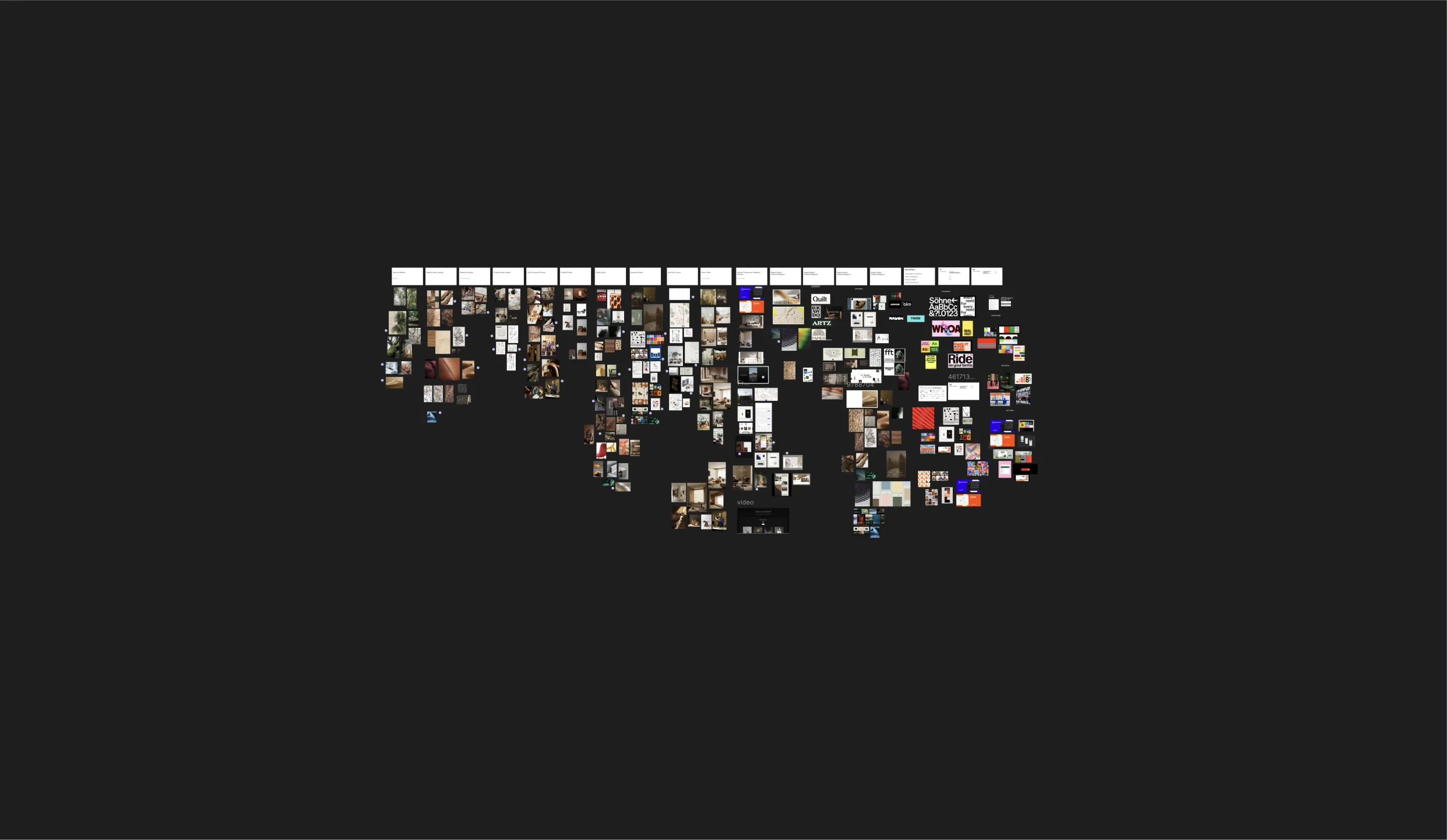
Before touching a pixel, we followed a piece of furniture through its whole life: raw material, craft, the photo shoot, the product page and, finally, someone's living room.
One pattern kept coming back. Nobody describes furniture by its specs. They describe moods and textures.
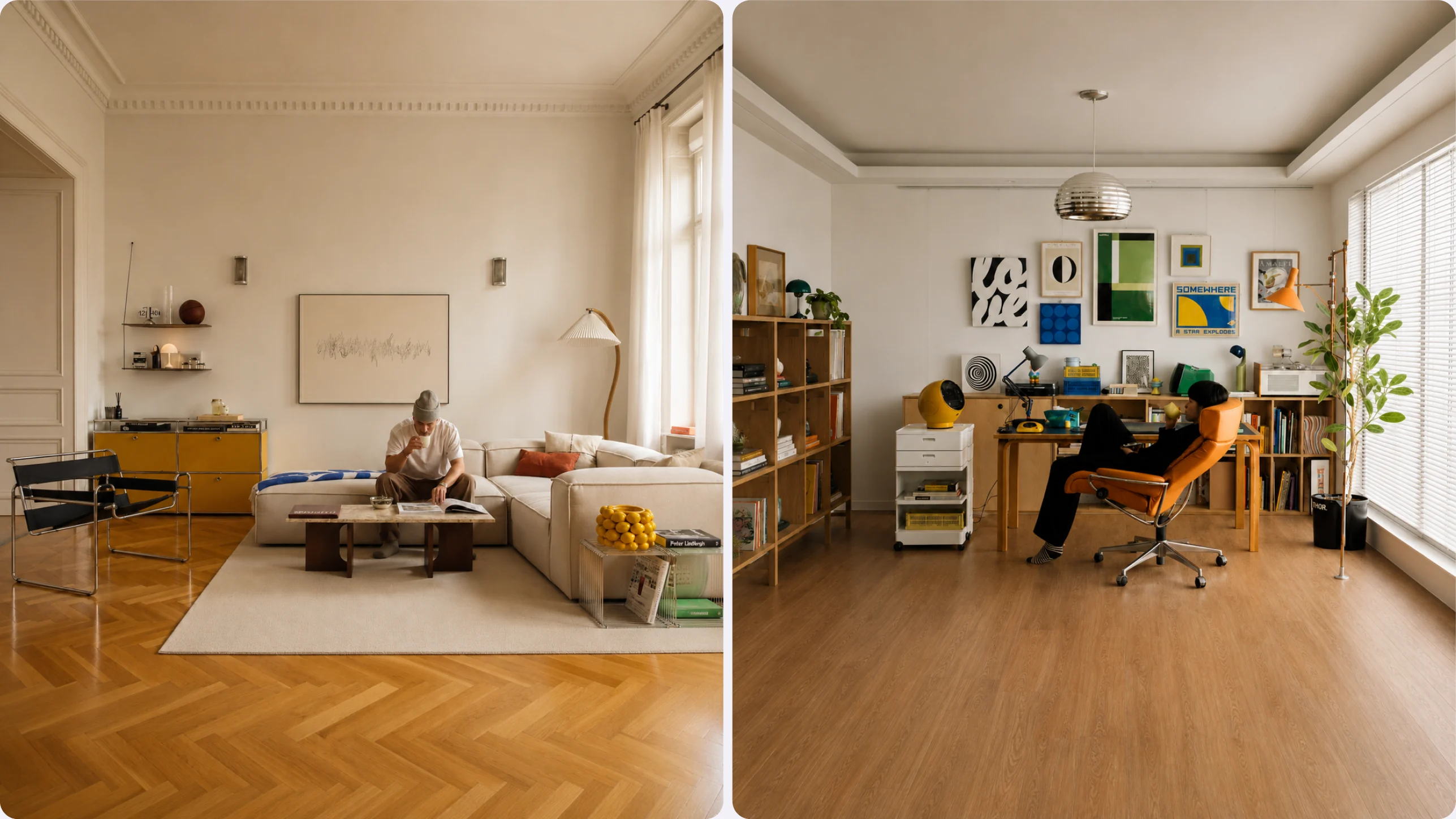
So we explored two directions. Tastemaker: confident, minimal, high-end. Contemporary Playful: bold and expressive, for spaces that should feel alive.
From raw material to living room.
Before touching a pixel, we followed a piece of furniture through its whole life: raw material, craft, the photo shoot, the product page and, finally, someone's living room.
One pattern kept coming back. Nobody describes furniture by its specs. They describe moods and textures.
So we explored two directions. Tastemaker: confident, minimal, high-end. Contemporary Playful: bold and expressive, for spaces that should feel alive.
We got outvoted. Thankfully.
We were rooting for Contemporary Playful. We like a bit of character.
Amir saw it differently. First Chair would be showing a lot of furniture, so the brand had to be a vessel, not the main event. Tastemaker it was. He was right.
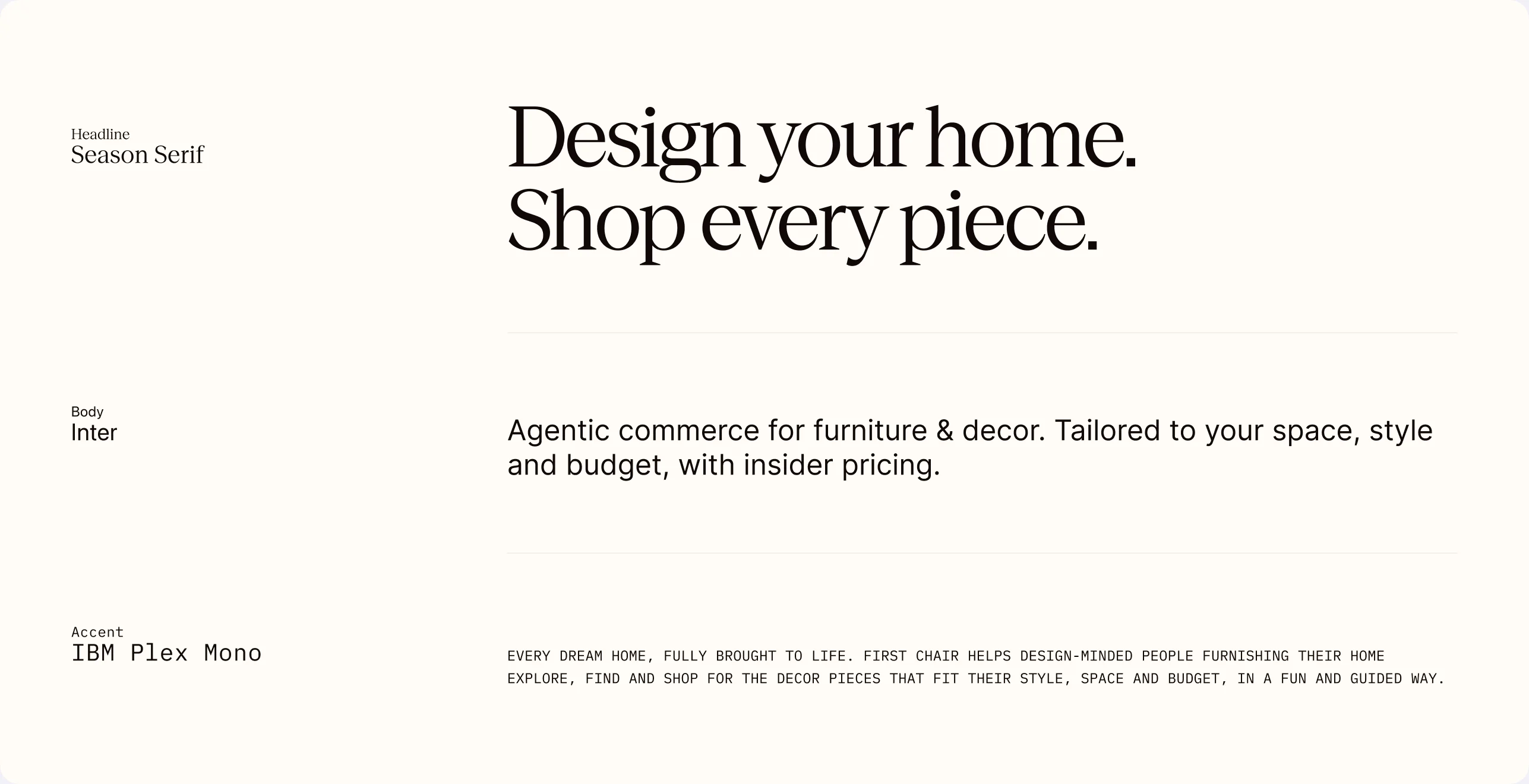
From there it was curation. The more we explored, the bigger the First Chair universe got, so we cut until only the essentials were left: the wordmark, the type, the color system and the imagery.
We got outvoted. Thankfully.
We were rooting for Contemporary Playful. We like a bit of character.
Amir saw it differently. First Chair would be showing a lot of furniture, so the brand had to be a vessel, not the main event. Tastemaker it was. He was right.
From there it was curation. The more we explored, the bigger the First Chair universe got, so we cut until only the essentials were left: the wordmark, the type, the color system and the imagery.
A swatch for every style.
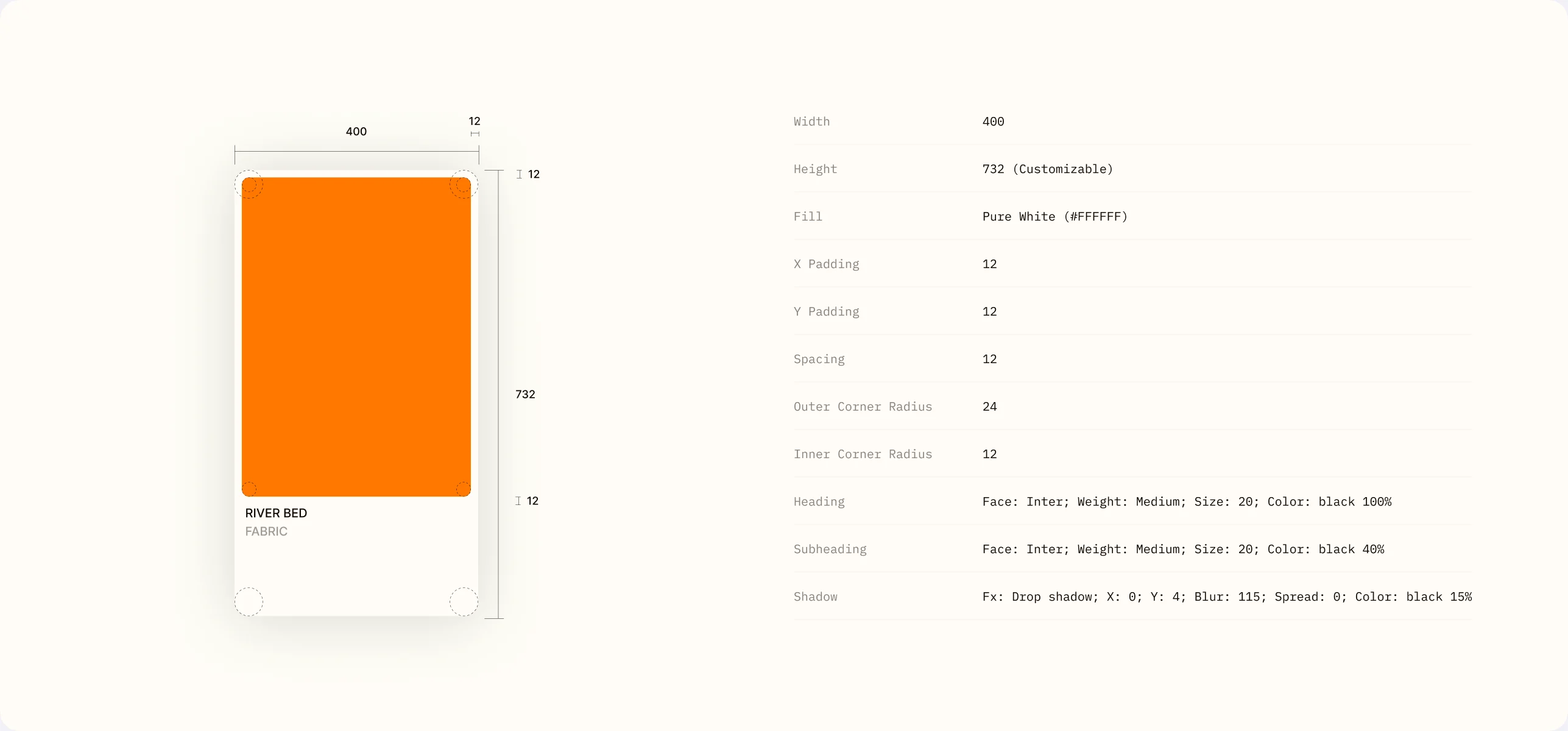
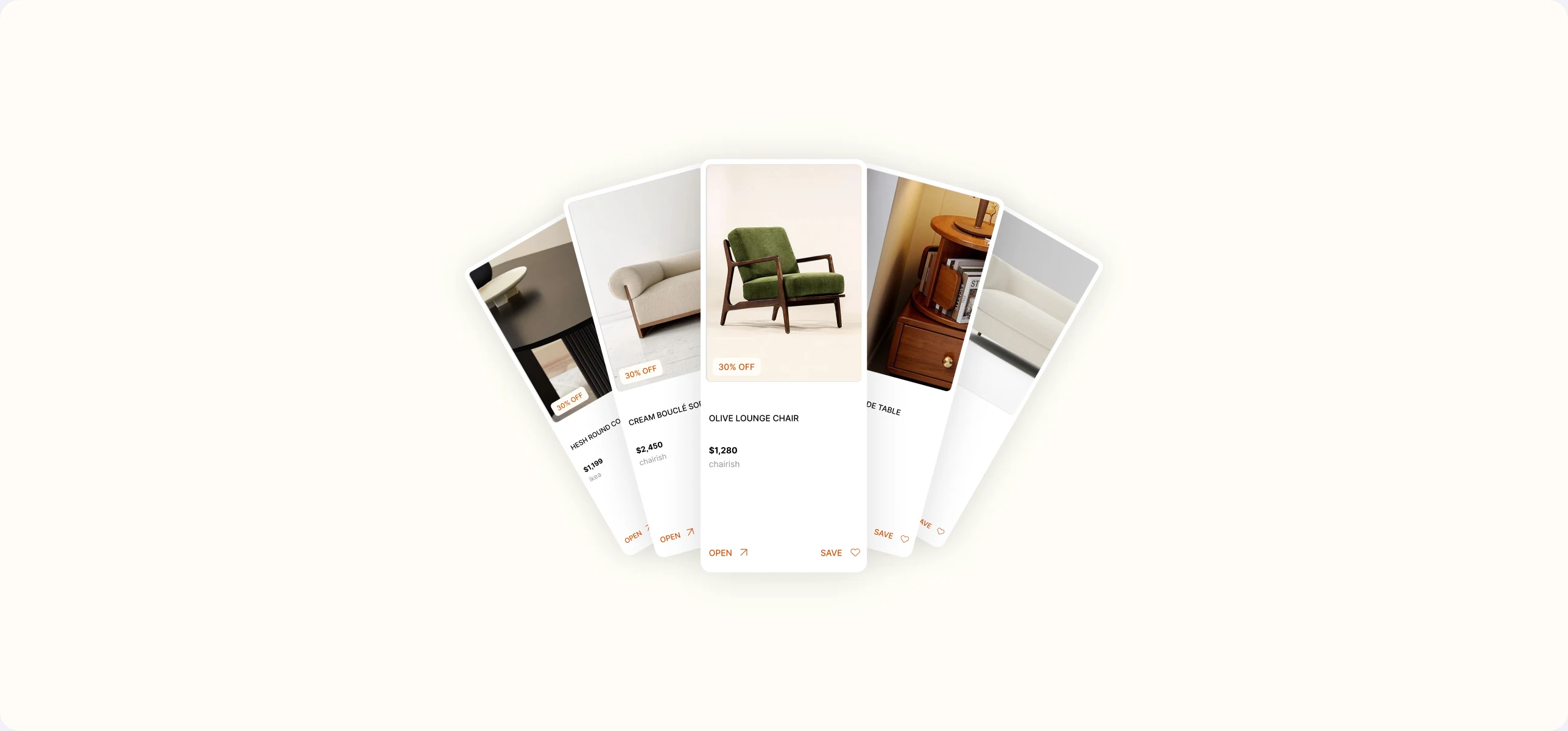
Designers have trusted the swatch card for decades. Borrowing its shape gives First Chair instant credibility, and gives every style a name, a color and a texture you can hold up against your room.
The idea started as a few Pantone-inspired cards in our shared channel. Then we tied each card to real product measurements, so every swatch is spec'd as well as pretty.
A swatch for every style.
Designers have trusted the swatch card for decades. Borrowing its shape gives First Chair instant credibility, and gives every style a name, a color and a texture you can hold up against your room.
The idea started as a few Pantone-inspired cards in our shared channel. Then we tied each card to real product measurements, so every swatch is spec'd as well as pretty.
 Sivan Hurvitz
How do you even articulate your taste?
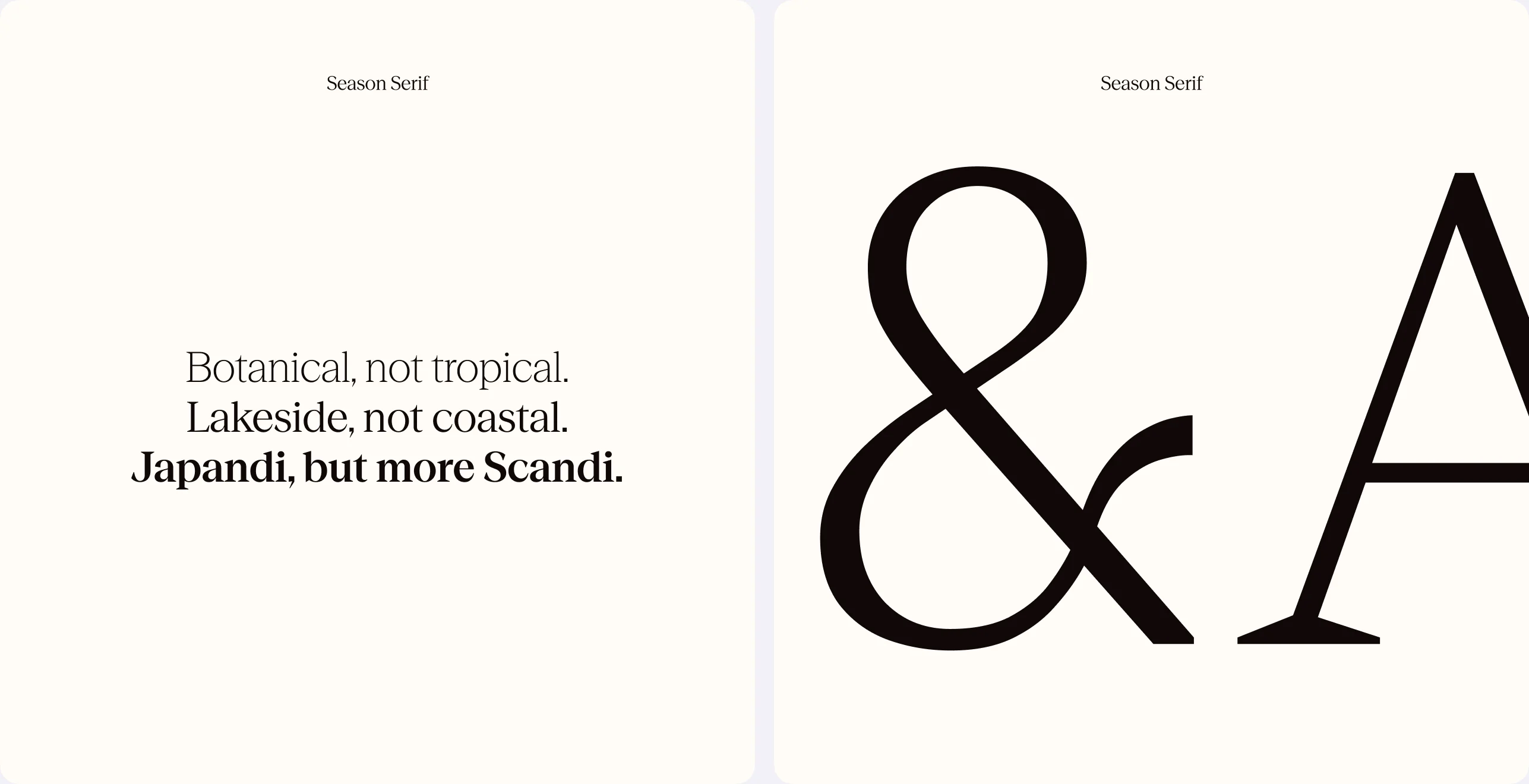
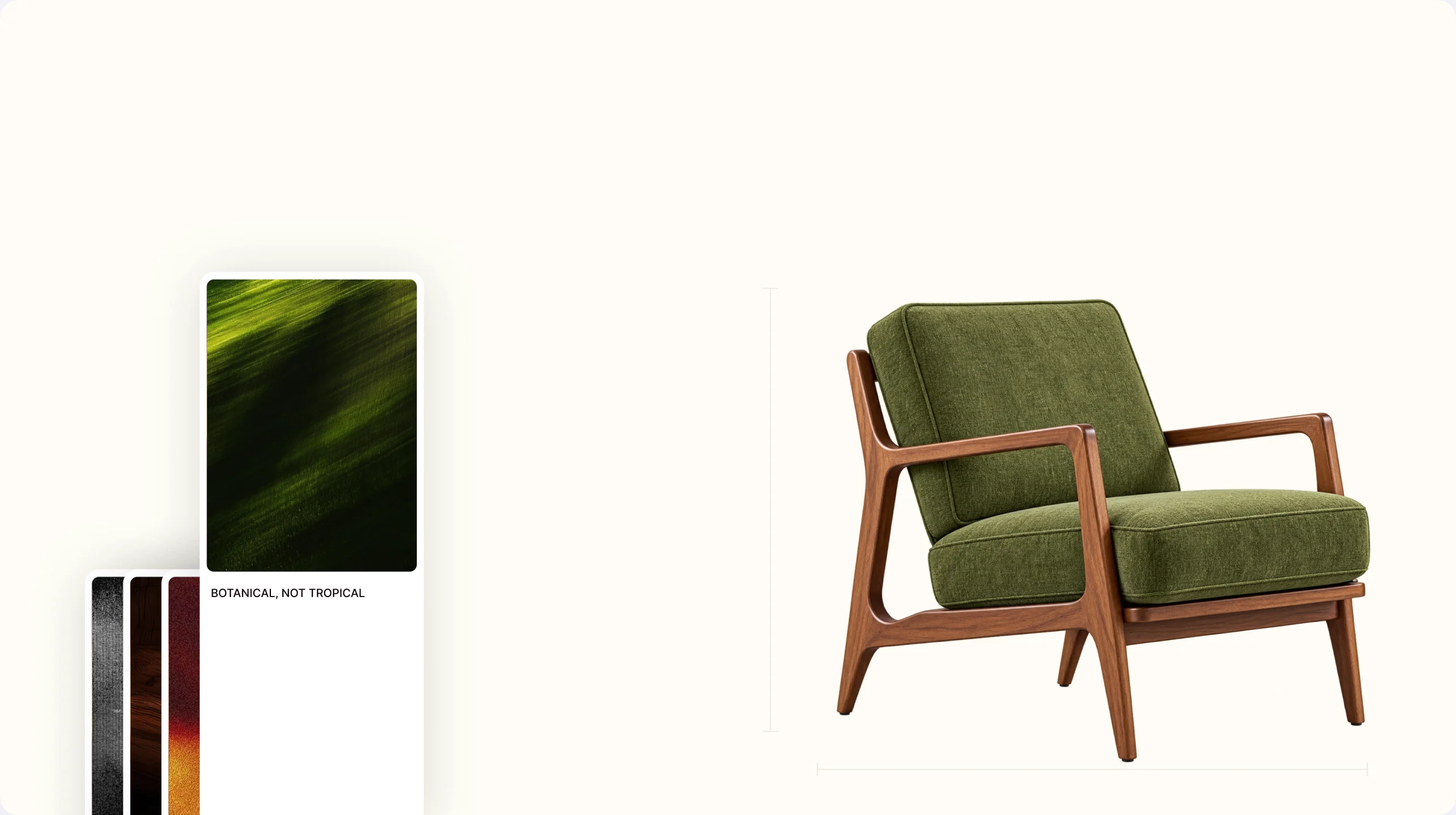
You don't. We didn't ask people to describe it. We gave each style a picture instead: its own abstract image, a name, and one contrast that says what it is and what it isn't.
Botanical, not tropical. Lakeside, not coastal. Three words doing the work of a thirty-image mood board.
How do you even articulate your taste?
You don't. We didn't ask people to describe it. We gave each style a picture instead: its own abstract image, a name, and one contrast that says what it is and what it isn't.
Botanical, not tropical. Lakeside, not coastal. Three words doing the work of a thirty-image mood board.
Taste, translated.
The result is a visual language for taste. Abstract imagery gives each style its own identity, and a swatch system lets people see their room across aesthetics (Industrial, Brutalist, Botanical) before buying a thing.
The guidelines landed four weeks after kickoff, right on schedule.
Taste, translated.
The result is a visual language for taste. Abstract imagery gives each style its own identity, and a swatch system lets people see their room across aesthetics (Industrial, Brutalist, Botanical) before buying a thing.
The guidelines landed four weeks after kickoff, right on schedule.
Still at the table.
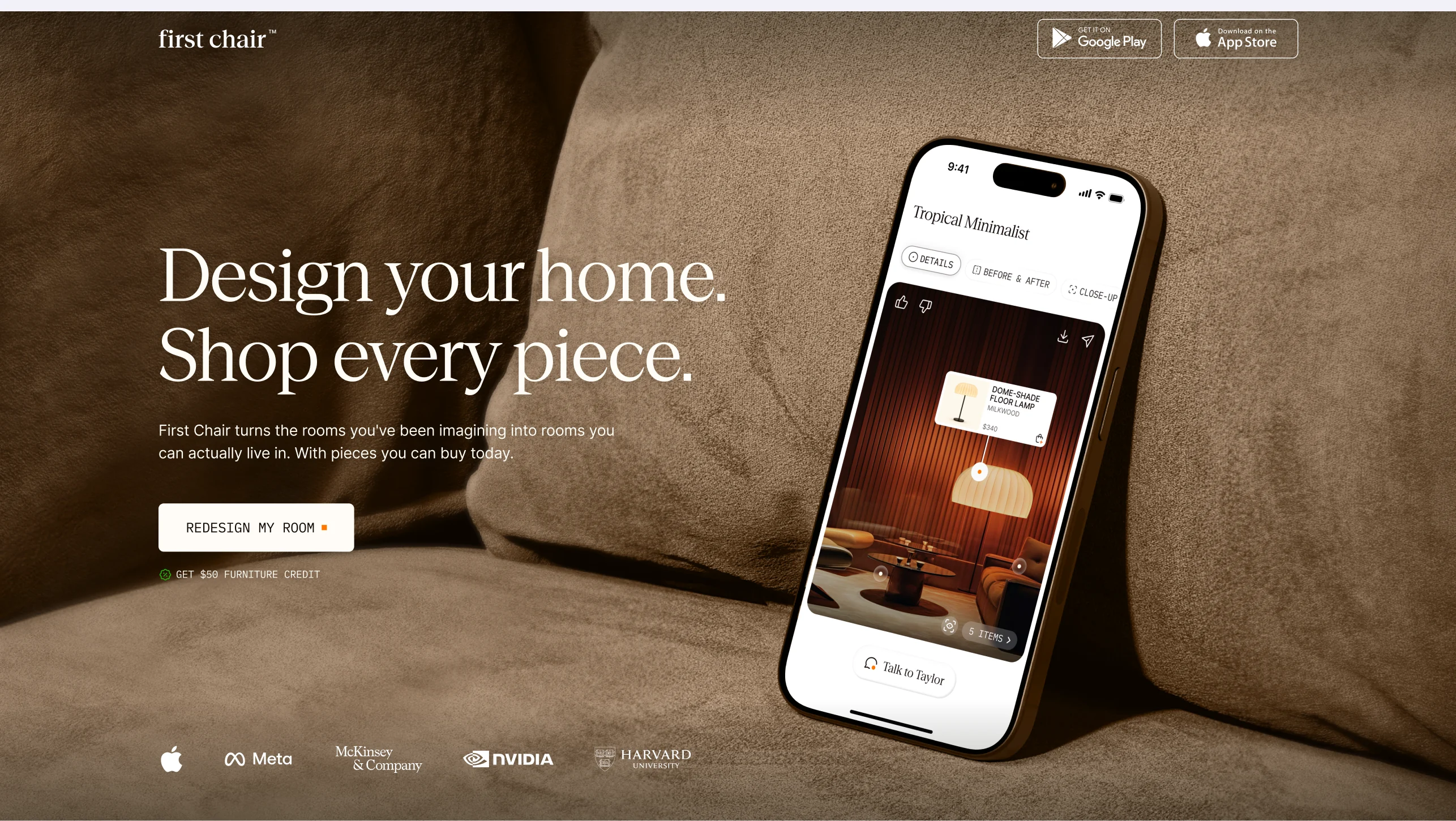
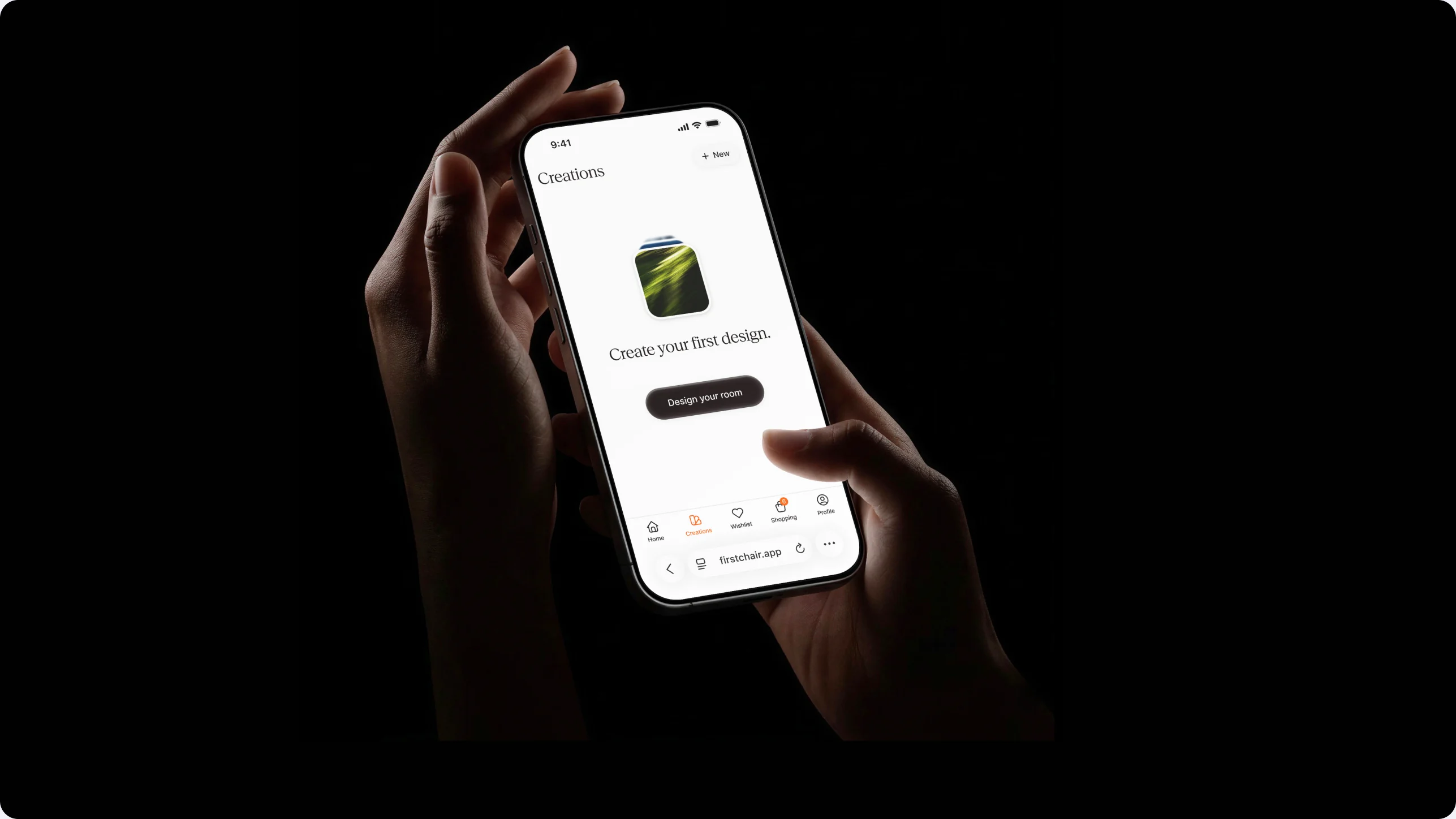
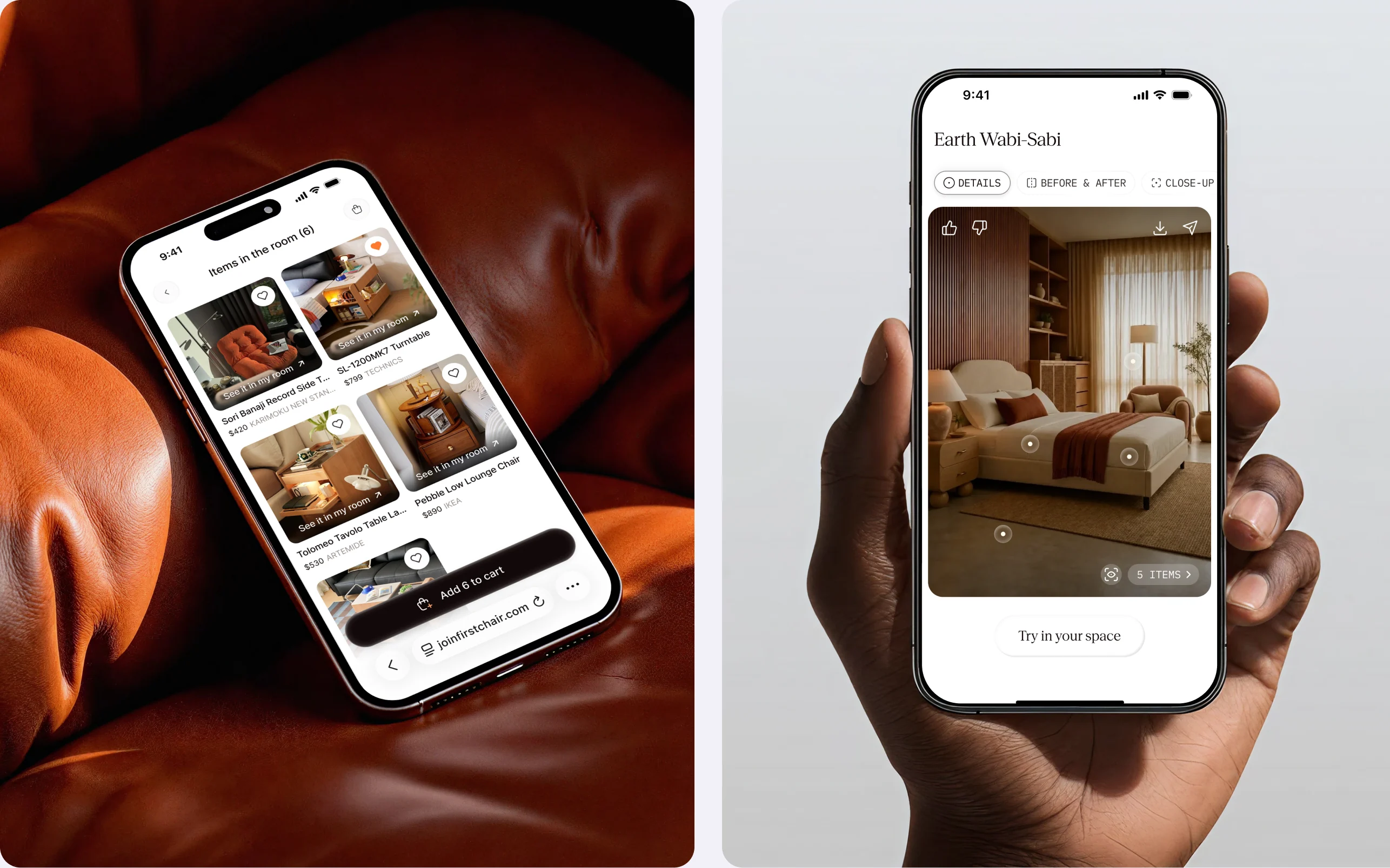
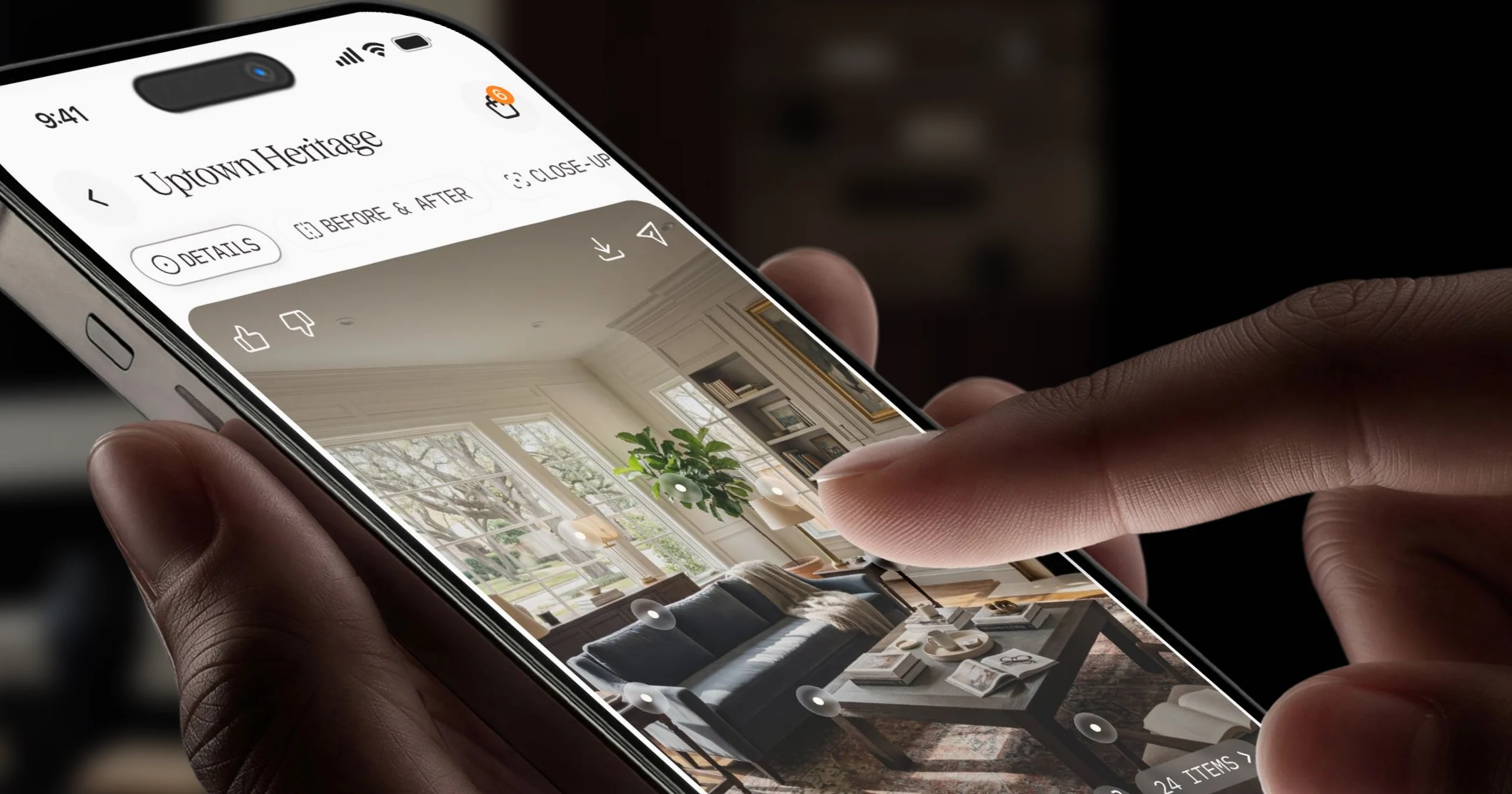
After the sprint we stayed on, and we've since designed First Chair's website and app alongside their team.
A brand only proves itself in use, so we kept refining it on product pages, loading states and the “Talk to Taylor” button until it held up in people's hands.
The app went live this summer and the new website followed in August. People have designed over 15,000 rooms with it since. Not bad for a chair.
Still at the table.
After the sprint we stayed on, and we've since designed First Chair's website and app alongside their team.
A brand only proves itself in use, so we kept refining it on product pages, loading states and the “Talk to Taylor” button until it held up in people's hands.
The app went live this summer and the new website followed in August. People have designed over 15,000 rooms with it since. Not bad for a chair.
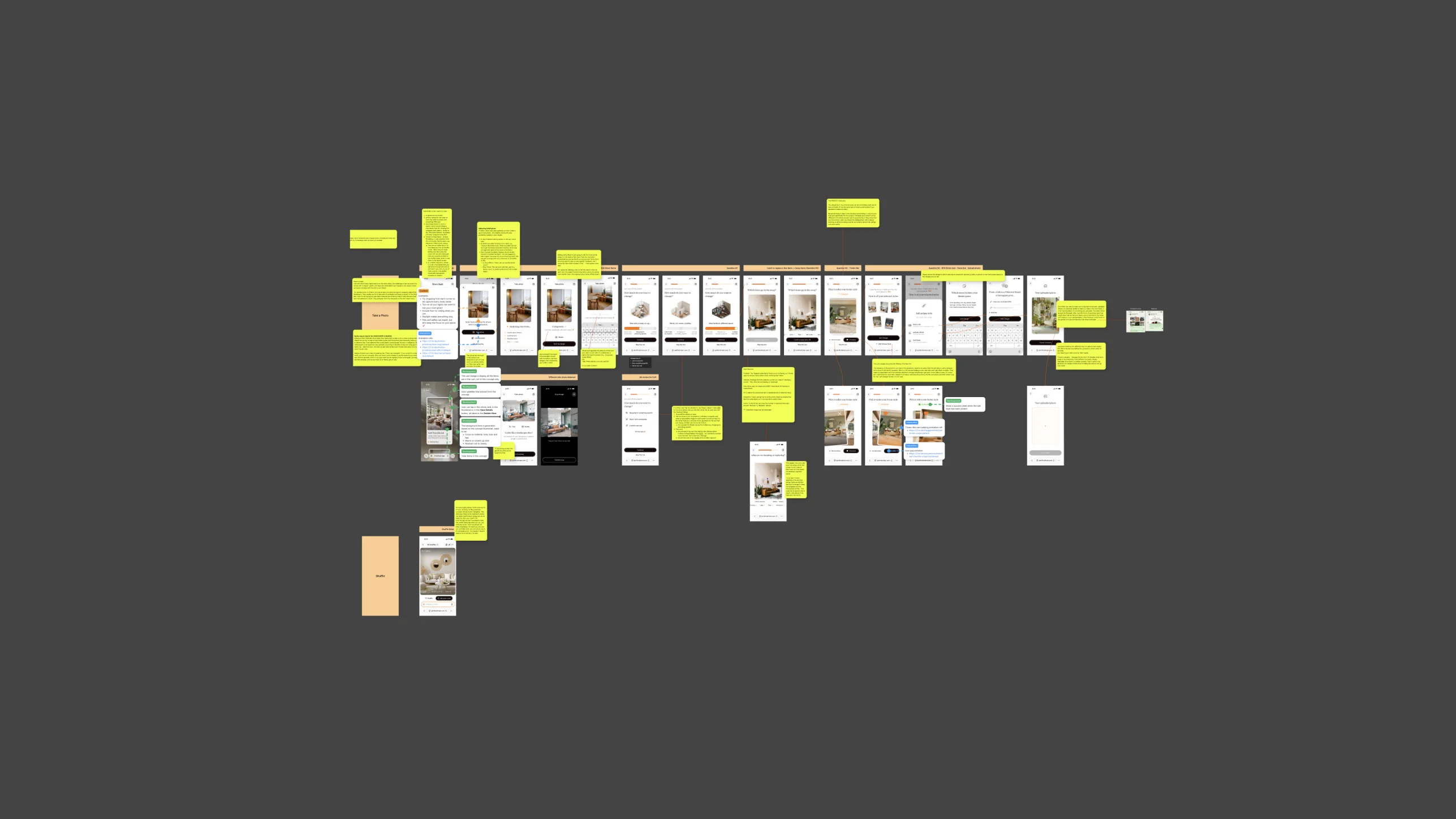
Scale, without the slop.
AI can generate a thousand rooms a minute. Without guardrails, that's a thousand slightly-off ones.
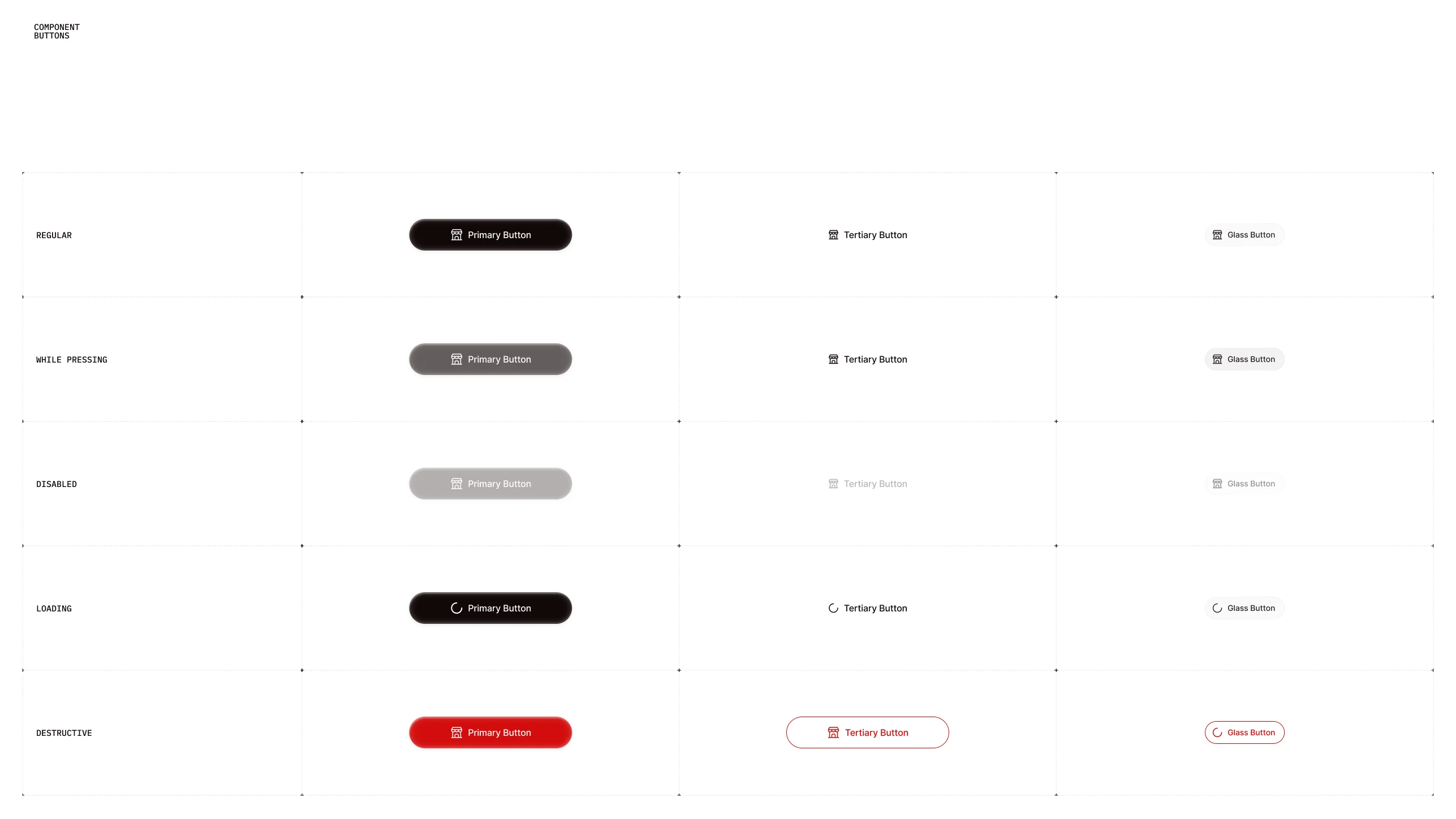
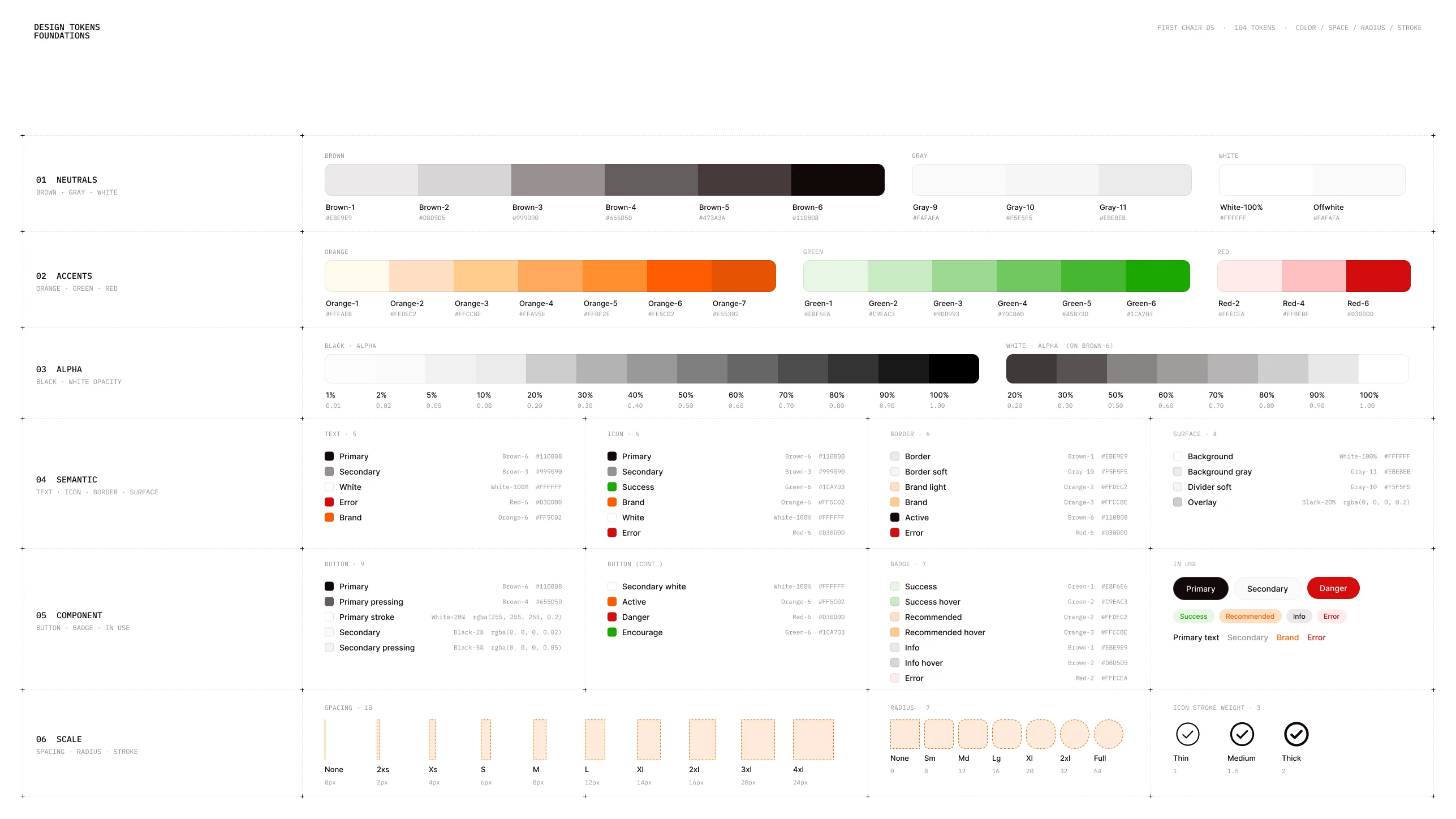
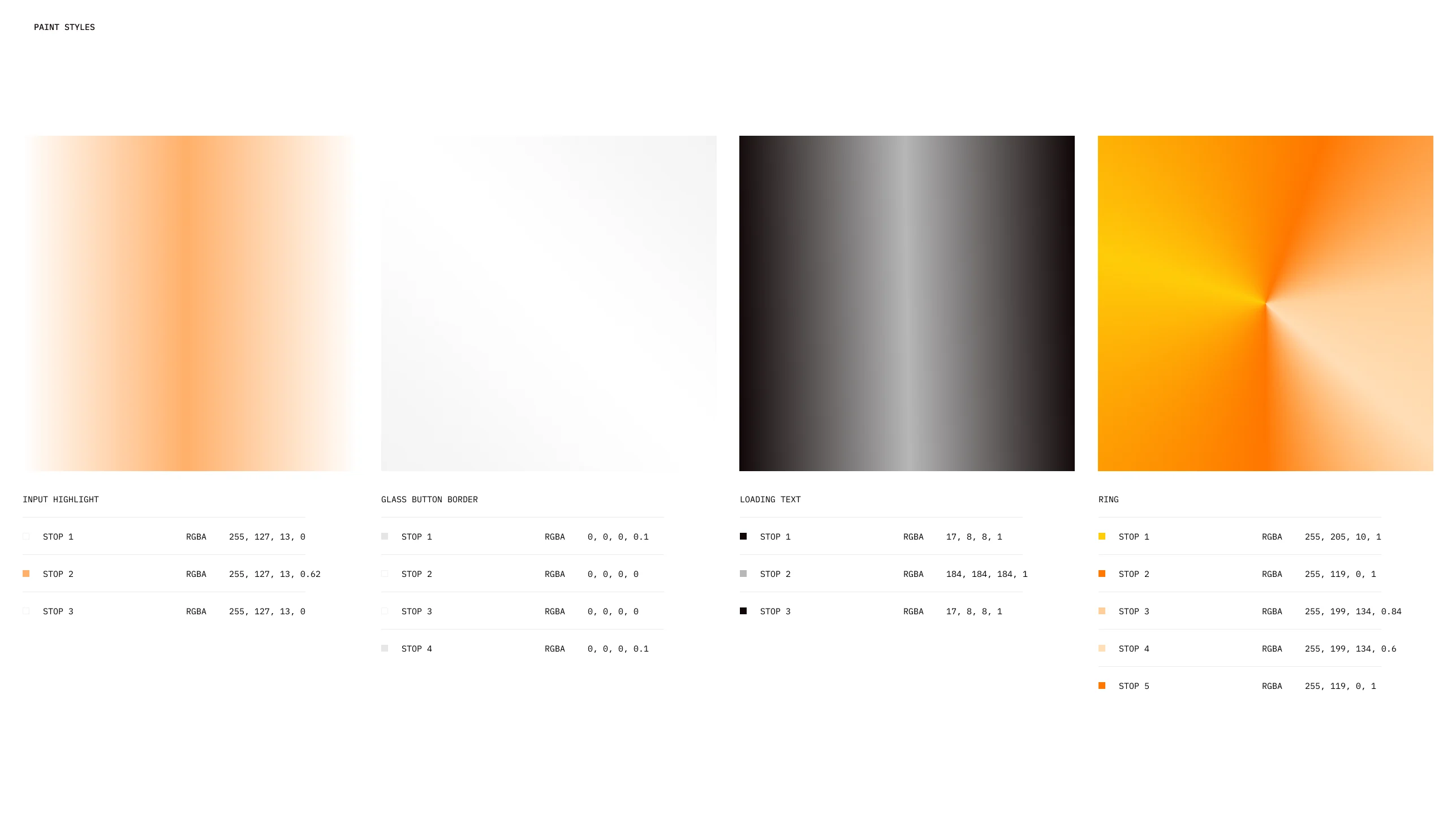
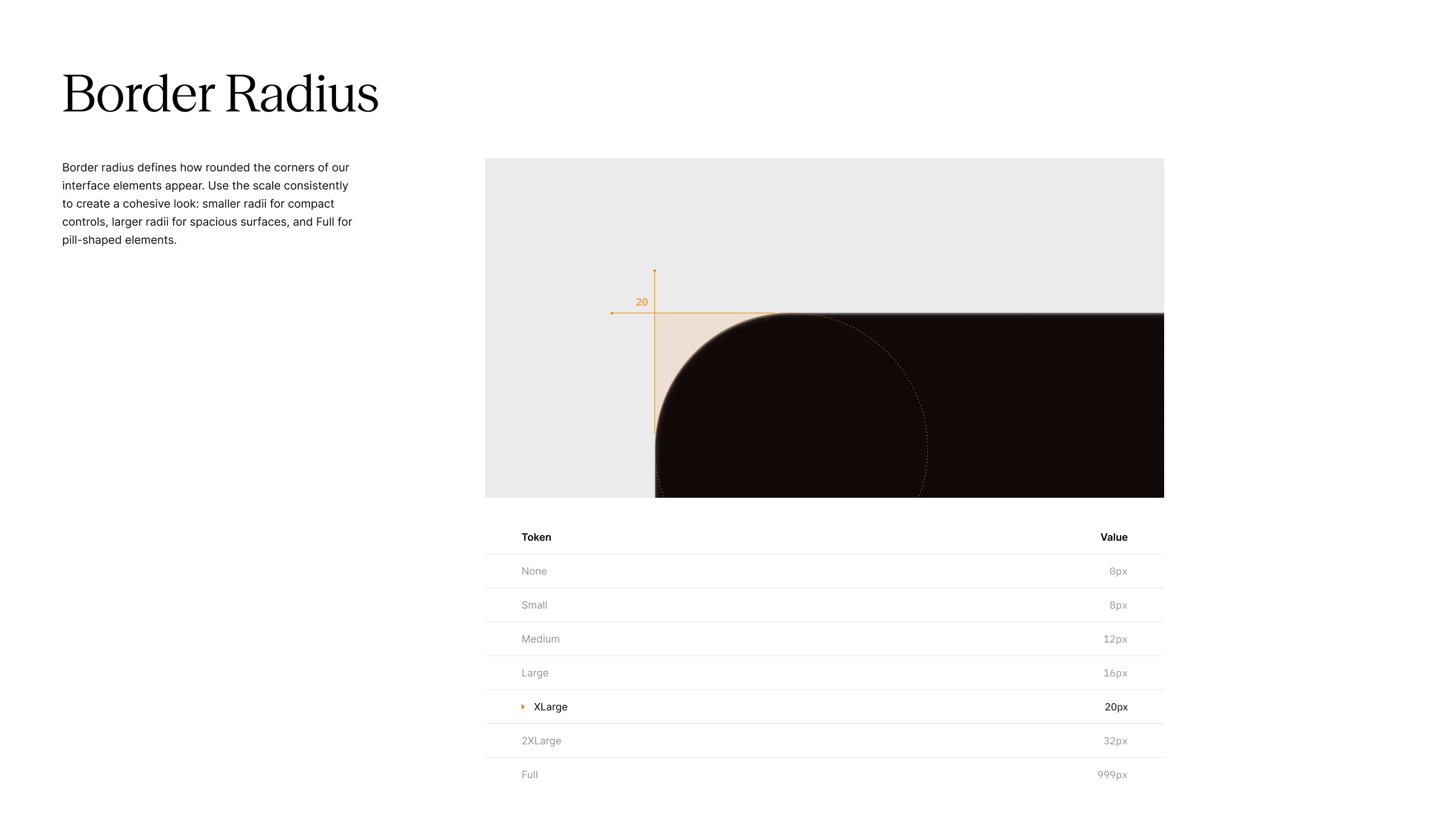
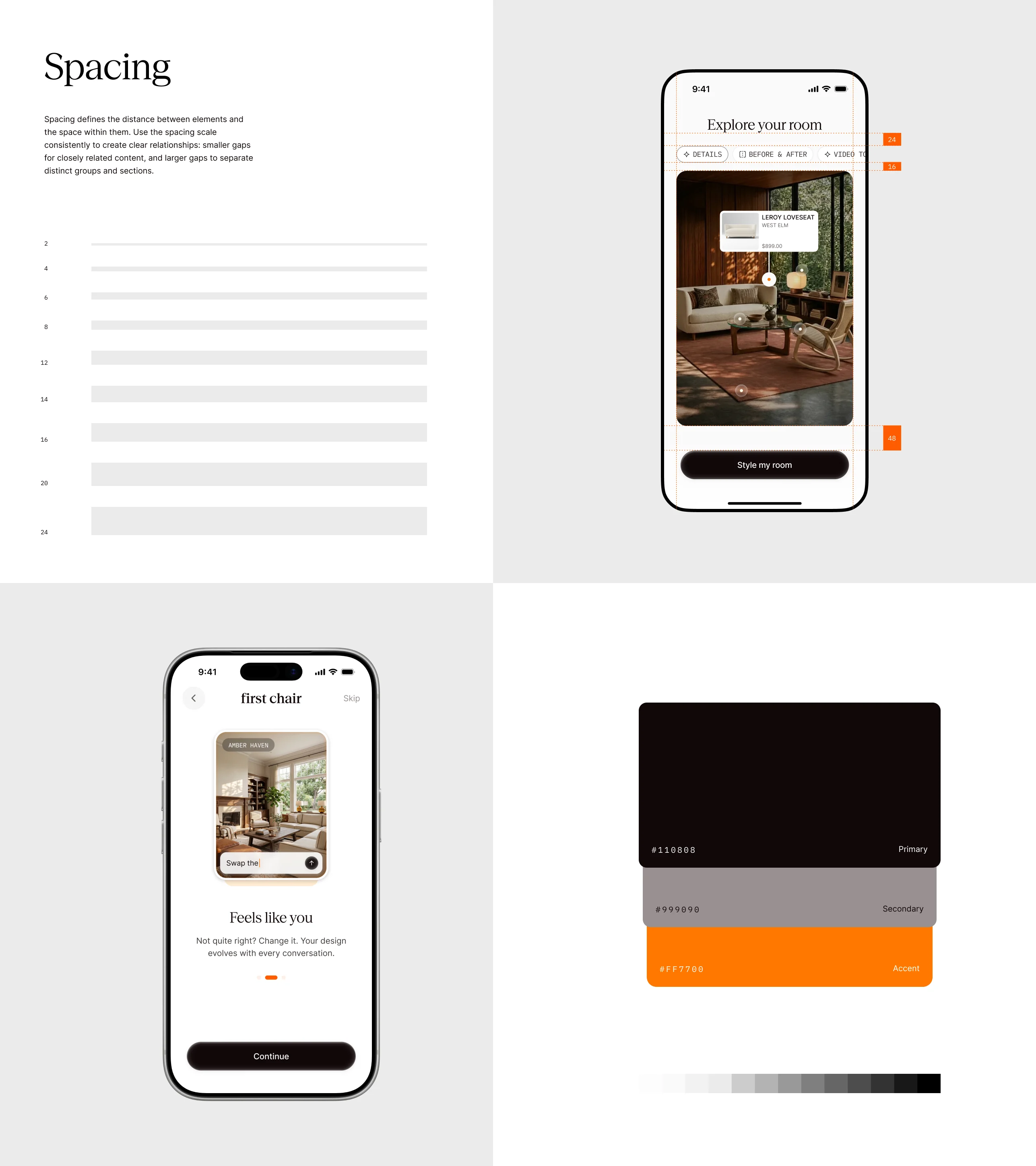
First Chair's system keeps every screen on-brand at that pace: 104 tokens across color, spacing, radius and stroke, a component library, and one icon set drawn on a single grid.
So the team (and the AI) always has a right answer to reach for.
Scale, without the slop.
AI can generate a thousand rooms a minute. Without guardrails, that's a thousand slightly-off ones.
First Chair's system keeps every screen on-brand at that pace: 104 tokens across color, spacing, radius and stroke, a component library, and one icon set drawn on a single grid.
So the team (and the AI) always has a right answer to reach for.
The first right choice.
First Chair came to us with a working title and a simple idea, helping people put their taste into words. Four weeks later it had a name and a brand built around that idea.
Since then the brand has moved into the website and the app, and people have designed more than 15,000 rooms with it. Most of them wouldn't call themselves designers, which is exactly who it was built for.
Big thanks to Amir Levanon,  Aviad Simon and
  Ethan Hall for trusting us with it, to Sivan Hurvitz for the strategy and to Sunny Fassler for the name. On our side it was
  Panca Septiana,
  Hoang,
  Silvia Yu,
  Jean Massad,
  Ga Huy,
  Murilo,
  Vit and
  Trang.
The first right choice.
First Chair came to us with a working title and a simple idea, helping people put their taste into words. Four weeks later it had a name and a brand built around that idea.
Since then the brand has moved into the website and the app, and people have designed more than 15,000 rooms with it. Most of them wouldn't call themselves designers, which is exactly who it was built for.
Big thanks to Amir Levanon, Aviad Simon and Ethan Hall for trusting us with it, to Sivan Hurvitz for the strategy and to Sunny Fassler for the name. On our side it was Panca Septiana, Hoang, Silvia Yu, Jean Massad, Ga Huy, Murilo, Vit and Trang.
This was made possible by all your great design and brand work and relentless investment in craft!


.webp)

.webp)

.webp)


.jpg)
.webp)


.webp)
.webp)

.webp)